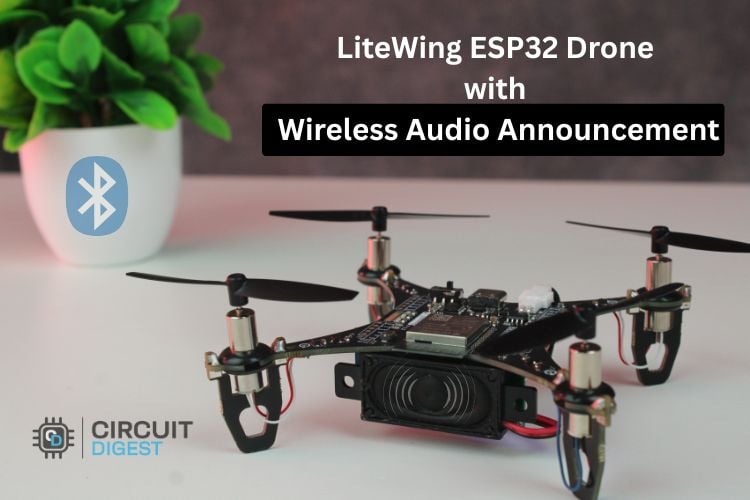
Turn an ESP32-powered LiteWing drone into a lightweight flying loudspeaker with a simple add-on audio module
Introduction
How the LiteWing Drone Works
DIY drones have become much more accessible thanks to open-source hardware platforms. One such platform is the LiteWing ESP32 drone, a compact Wi-Fi–controlled quadcopter designed for makers and students who want to experiment with programmable drones. Powered by an ESP32-S3 microcontroller and built on an open PCB frame, LiteWing allows developers to modify hardware, firmware, and add creative payloads.
In this project, we take the LiteWing drone a step further and turn it into a flying loudspeaker. By attaching a lightweight Bluetooth audio module or speaker payload, the drone can broadcast sound while in flight. The modification is intentionally simple—no major firmware changes are required. The speaker streams audio directly from a smartphone via Bluetooth while the drone flies.
This project demonstrates how flexible open-source drone platforms can be. With minimal additional hardware, the drone can become a mobile announcement system, an experimental aerial audio platform, or just a fun demonstration, Esp32 Drone with Bluetooth speaker project.
LiteWing is built around the ESP32-S3, a powerful dual-core microcontroller capable of running real-time flight control algorithms. The drone integrates an MPU6050 IMU, which provides gyroscope and accelerometer data required for stabilisation and motion tracking.
Unlike traditional drones that rely on dedicated radio transmitters, LiteWing uses Wi-Fi communication. A smartphone or computer can connect directly to the drone and send control commands. This approach simplifies the hardware while making the system programmable through tools like Python, Arduino IDE, or the official ESP-IDF framework.
The drone’s design is highly compact. The frame itself is made from the PCB, reducing weight and eliminating the need for additional structural parts. The propulsion system consists of four 720 coreless DC motors paired with small propellers and PWM-controlled MOSFET drivers. Power is supplied by a single-cell 3.7 V Li-Po battery that is charged through a TP4056 charging circuit.
Because of this lightweight design, the drone can carry small payloads such as sensors, LEDs, or, in this case, a mini speaker.
Concept of a Flying Loudspeaker
The idea behind this project is simple: attach a lightweight speaker module to the drone and stream audio wirelessly from a phone. Since LiteWing already supports smartphone connectivity and lightweight payloads, it becomes a perfect base for experimentation.
Instead of routing audio signals through the drone’s microcontroller, the speaker module handles audio playback independently. The drone only carries the payload and provides power if required. This approach keeps the system lightweight and avoids complex firmware modifications.
The result is a drone capable of flying around while broadcasting music, voice messages, or alerts.
Components Required
To build the flying loudspeaker drone, you will need the following hardware:
- LiteWing ESP32 drone
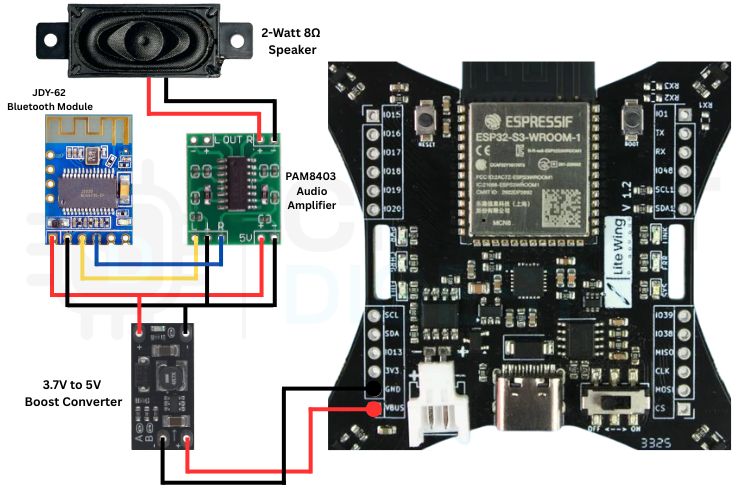
- Lightweight Bluetooth speaker module or mini amplifier with speaker
- 3.7 V Li-Po battery (if the speaker requires separate power)
- Mounting bracket or lightweight 3D-printed holder
- Hook-and-loop straps or double-sided tape
- Smartphone for Bluetooth audio streaming
The most important requirement is keeping the speaker lightweight. Since the drone’s payload capacity is limited, heavy speakers can reduce flight stability or shorten flight time.
Mounting the Speaker Payload
Start by selecting a small speaker module that fits within the payload capacity of the drone. Lightweight Bluetooth modules designed for portable electronics work best.
Mount the speaker on the top side of the drone frame. Position it near the center to maintain balance and prevent uneven thrust during flight. If the speaker is mounted too far from the center, it can cause the drone to tilt or drift.
Use a simple mounting method such as:
- Double-sided foam tape
- Velcro straps
- A small 3D-printed holder
Make sure the speaker is firmly secured but still removable. The mounting should not block the propellers or interfere with airflow.
Powering the Audio Module
There are two common ways to power the speaker:
Separate Battery
The simplest approach is to power the speaker using its own small Li-Po battery. This avoids modifying the drone’s power circuitry and keeps the system modular.
Shared Drone Battery
Alternatively, the speaker can draw power from the drone’s battery if the voltage requirements match. LiteWing typically operates from a 3.7 V Li-Po cell, so low-power audio modules designed for single-cell batteries can work directly.
If using shared power, ensure that the current consumption is low enough so that it does not affect motor performance.
Connecting the Speaker via Bluetooth
Once the speaker module is powered, pairing it with a smartphone is straightforward.
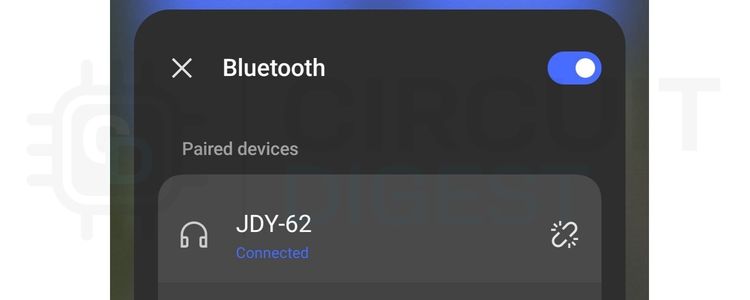
- Turn on the Bluetooth speaker module.
- Open Bluetooth settings on the smartphone.
- Pair with the speaker device.
- Play audio from any media application.
The phone streams audio directly to the speaker while the drone is flying. This makes the system extremely simple since the drone itself does not handle the audio processing.
Flight Testing
Before flying with the speaker attached, perform a few safety checks.
First, power up the drone and verify that all motors spin correctly. Then check the drone’s stability without the speaker payload. Once you confirm normal operation, attach the speaker and test again.
During initial tests:
- Fly indoors or in a controlled environment.
- Use gentle throttle to verify balance.
- Check that the added weight does not affect motor response.
If the drone tilts or drifts, reposition the speaker closer to the center.
Once stable, you can begin streaming music or voice messages and observe how the drone performs during flight.
Applications of a Loudspeaker Drone
Although this project is primarily a fun experiment, it also demonstrates several practical possibilities.
A flying loudspeaker drone could be used for:
- Event announcements
- Educational demonstrations
- Creative art installations
- Experimental aerial audio research
- Interactive drone shows
Since the LiteWing platform is fully programmable, developers can extend the project further by adding features such as automated flight paths, gesture control, or synchronized drone audio systems.
Conclusion
The LiteWing ESP32 drone offers an excellent platform for creative maker projects thanks to its open-source design and programmable architecture. By attaching a small Bluetooth speaker, you can easily transform the drone into a flying loudspeaker capable of broadcasting sound during flight.
The modification requires minimal hardware changes, making it a great weekend project for drone enthusiasts and embedded developers alike. More importantly, it highlights how flexible open hardware platforms can be when combined with imagination and a few extra components.
Explore step-by-step DIY Drone Projects and Tutorials to learn how to build programmable ESP32 drones, gesture-controlled quadcopters, and other innovative UAV experiments for makers.