Build a smart Arduino-powered waste sorter using computer vision and Edge Impulse
Waste segregation is one of the biggest challenges in modern waste management. In homes, schools, and public places, recyclable and hazardous materials are often thrown into the same bin, making recycling difficult and increasing environmental pollution. Manual sorting is time-consuming, inconsistent, and impractical for large-scale use.
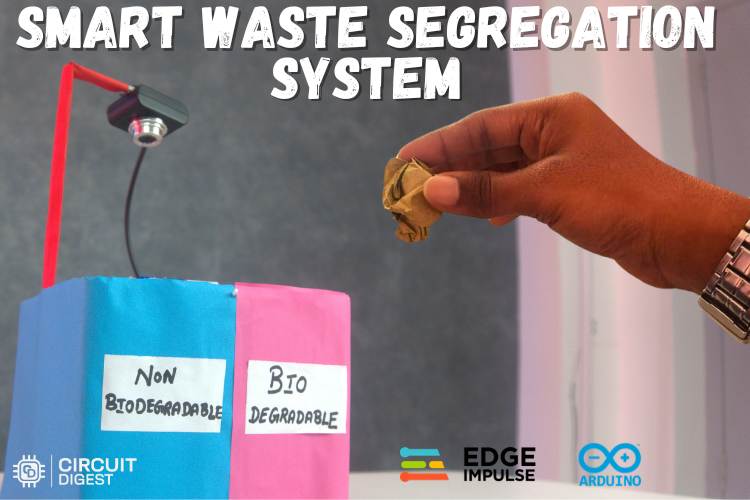
In this project, we build an AI-powered automatic waste segregation system using the Arduino UNO Q, a USB camera, and Edge Impulse machine learning. The system identifies different types of waste in real time and automatically sorts them into the correct category using a servo motor. Hazardous waste such as batteries triggers a warning buzzer instead of mechanical sorting.
This project demonstrates how embedded AI and computer vision can be combined with simple electronics to create an affordable smart recycling system for educational, research, and smart-city applications.
How the System Works
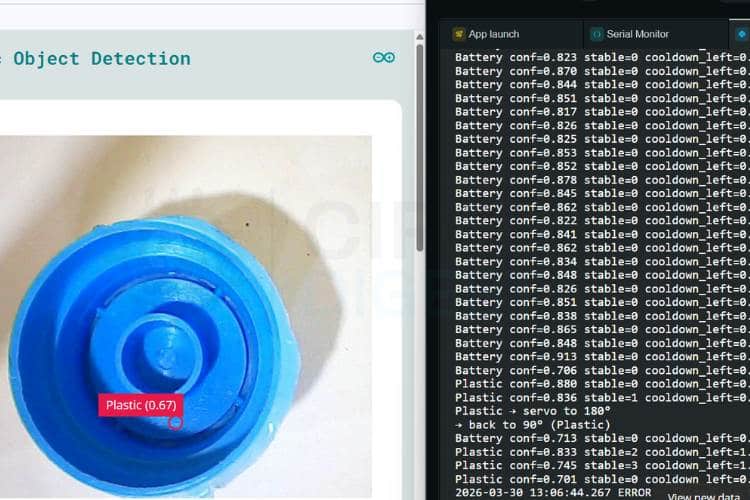
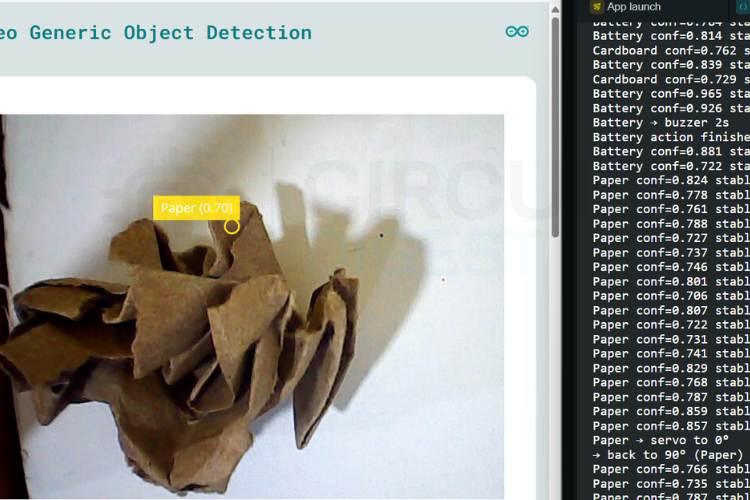
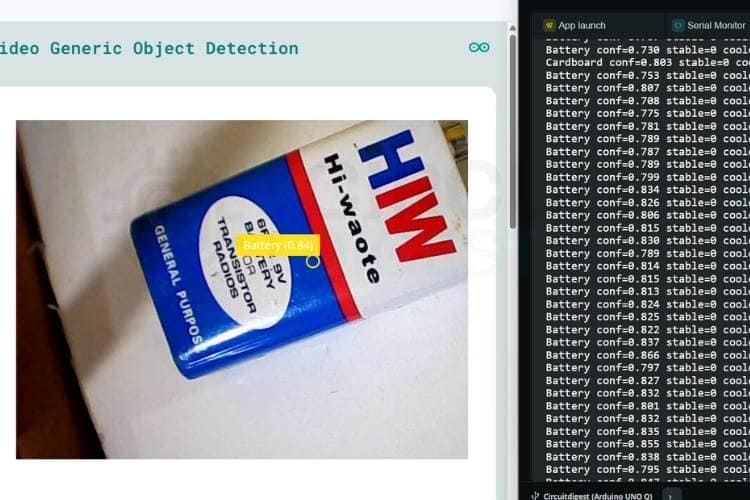
The system uses a USB camera to continuously capture live video frames. These frames are processed using an object detection model trained with Edge Impulse. The AI model is capable of identifying four waste categories:
- Paper
- Cardboard
- Plastic
- Battery
Once an object is detected with sufficient confidence, the Arduino UNO Q performs a corresponding action:
- Paper and cardboard are treated as biodegradable waste
- Plastic is classified as non-biodegradable waste
- Batteries are considered hazardous waste
A servo motor rotates to different positions to direct the waste into the correct compartment. If a battery is detected, the buzzer activates to alert the user instead of moving the servo.
To improve reliability, the system validates detections across multiple consecutive frames before taking action. This helps eliminate false triggers caused by lighting changes or temporary misdetections.
Features
- Real-time AI-based waste classification
- Automatic sorting using a servo motor
- Hazardous waste detection with buzzer alerts
- Edge Impulse machine learning integration
- Low-cost and beginner-friendly hardware
- Expandable design for smart recycling systems
Components Required
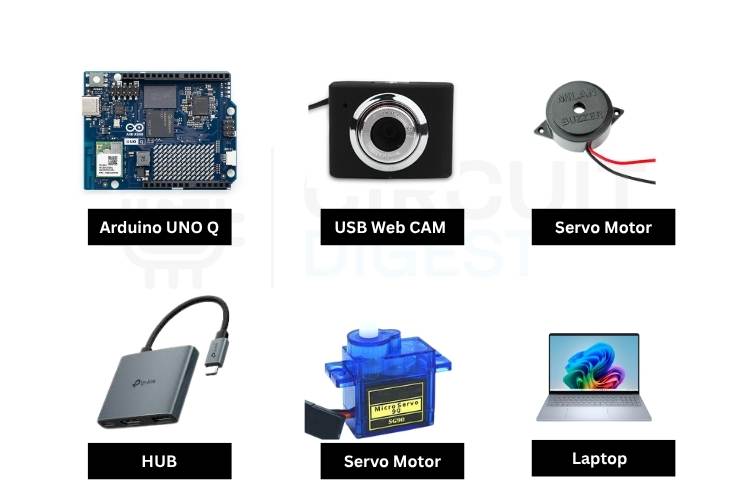
You will need the following components to build this project:
- Arduino UNO Q
- USB camera
- Micro servo motor
- Active buzzer
- USB hub
- Jumper wires
- Cardboard or acrylic sheet for bin construction
- Laptop or PC for programming and AI processing
Software Used
Edge Impulse
Edge Impulse is used to collect image data, label waste categories, train the object detection model, and export the optimized AI model.
Arduino App Lab
Arduino App Lab connects the AI model with the Arduino hardware. It handles communication between the Python application and the servo or buzzer using RouterBridge.
Hardware Setup
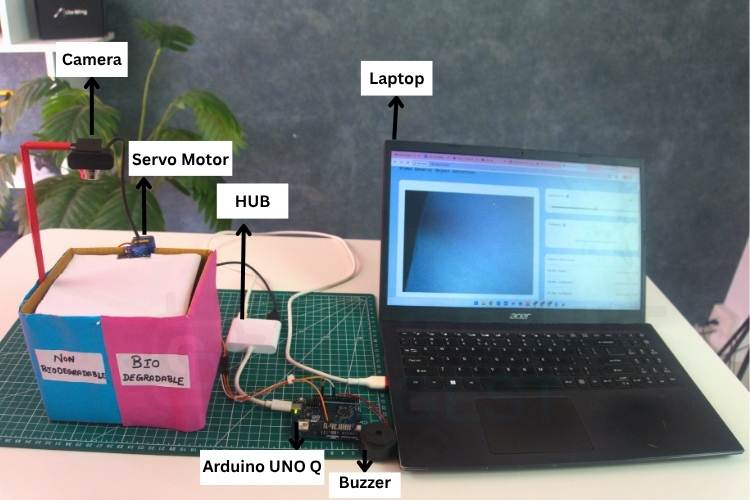
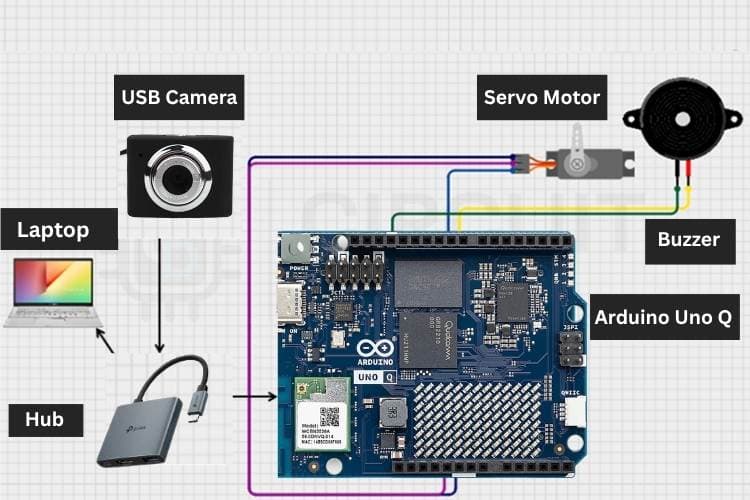
The USB camera and Arduino UNO Q are connected to the computer through a USB hub. The servo motor signal pin is connected to digital pin 9, while the buzzer is connected to digital pin 8.
The servo is mounted above the sorting section so it can redirect waste into separate compartments depending on the detected category.
Object Detection Workflow
The AI detection pipeline continuously scans incoming video frames and assigns confidence scores to detected objects. To prevent unstable behavior, the software uses:
- Confidence thresholds
- Debounce timing
- Stability counters
- Cooldown delays
The system only reacts after the same object is detected repeatedly with high confidence. This creates smoother and more reliable waste sorting behavior.
For example:
- Paper and cardboard rotate the servo to one side
- Plastic rotates the servo to the opposite side
- Battery detection activates the buzzer for safety warning
After sorting, the servo automatically returns to its neutral position.
Why Use Edge AI for Waste Segregation?
Traditional sensor-based sorting systems usually depend on moisture, metal, or IR sensors. While effective for basic sorting, they struggle with mixed waste categories and irregular shapes.
By using computer vision and machine learning, the system can visually identify objects instead of relying only on physical properties. This significantly improves flexibility and opens the door to smarter recycling solutions.
The project also introduces beginners to TinyML concepts such as:
- Dataset collection
- Image labeling
- Embedded AI deployment
- Real-time object detection
- Hardware automation
Possible Improvements
This project can be expanded further with additional features such as:
- Conveyor belt automation
- Cloud-based waste monitoring
- Fill-level sensors for smart bins
- Mobile notifications
- OLED status display
- Multi-servo sorting channels
- ESP32 or Raspberry Pi integration
You can also train the AI model to recognise more waste categories, including glass, cans, food waste, and electronic components.
Final Thoughts
This Automatic waste segregation system is a practical example of combining machine learning with embedded electronics to solve a real-world environmental problem. Using affordable hardware and Edge Impulse, the project demonstrates how intelligent automation can improve recycling efficiency and reduce manual sorting effort.
Whether you are a student, maker, or embedded systems enthusiast, this project is a great introduction to computer vision, TinyML, and smart automation using Arduino.
As AI-powered recycling technologies continue to evolve, Arduino projects like this can inspire smarter and more sustainable waste management systems for future smart cities.