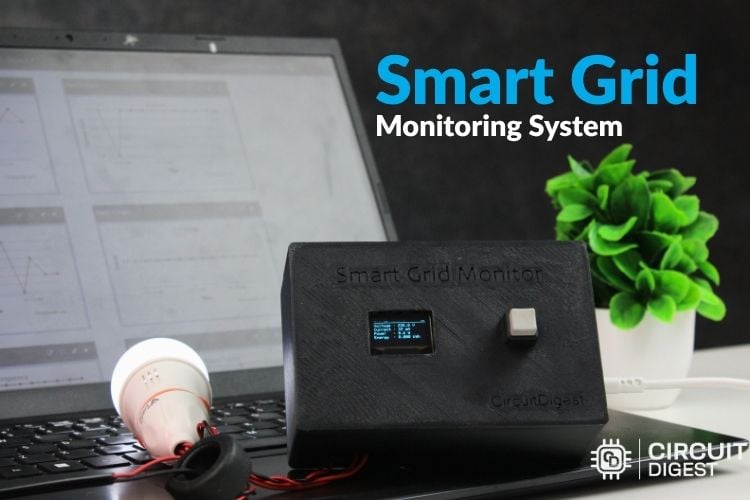
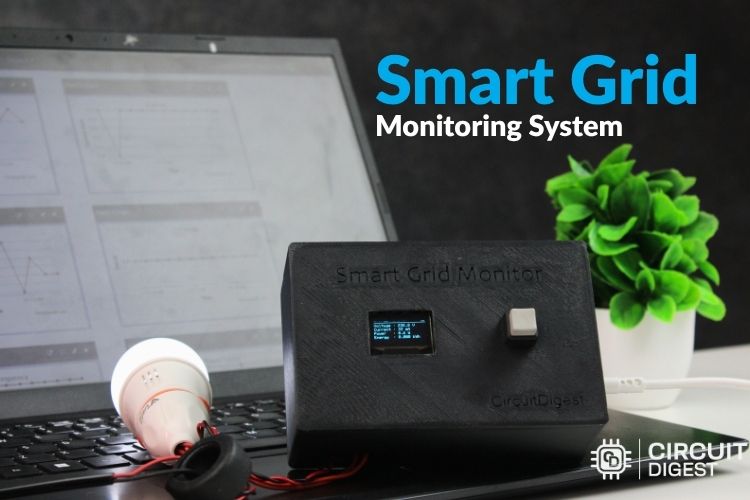
Real-time energy monitoring with Arduino UNO R4 WiFi, PZEM-004T, OLED, and ThingSpeak
Electricity monitoring is becoming increasingly important in homes, workshops, industries, and renewable energy systems. Instead of waiting for monthly electricity bills, smart energy monitoring systems allow users to track voltage, current, power consumption, frequency, and energy usage in real time.
In this project, we will build a compact IoT-based smart grid monitoring system using the Arduino UNO R4 WiFi and the PZEM-004T energy meter module. The system continuously measures electrical parameters, displays them locally on an OLED screen, and uploads the data to ThingSpeak for remote monitoring and long-term analysis.
This project is ideal for makers, students, IoT enthusiasts, and embedded developers who want to learn practical energy monitoring and cloud-connected automation.
Why Build a Smart Grid Monitoring System?
Traditional electrical systems provide very little insight into how energy is consumed. A smart monitoring node changes that by giving continuous access to live electrical data.
With real-time monitoring, you can:
- Detect abnormal voltage fluctuations
- Monitor appliance power consumption
- Identify overload conditions
- Analyze energy usage trends
- Improve energy efficiency
- Log long-term electrical data remotely
- Build predictive maintenance systems
This type of setup can be used in homes, labs, solar systems, workshops, and industrial monitoring applications.
How the System Works
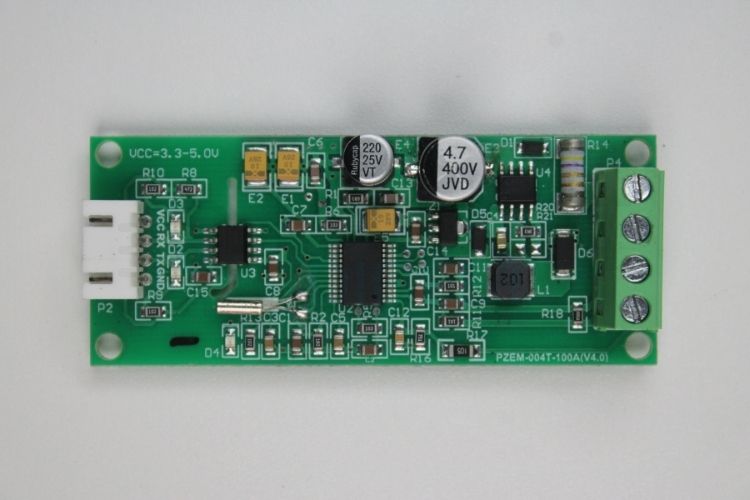
The core of this project is the PZEM-004T energy meter module. It measures:
- AC voltage
- Current
- Active power
- Energy consumption
- Frequency
- Power factor
The module communicates digitally with the Arduino UNO R4 WiFi using Modbus RTU over UART. Instead of handling analog calculations manually, the Arduino simply reads processed measurement values directly from the PZEM module.
The Arduino then performs three tasks simultaneously:
- Reads electrical parameters from the PZEM-004T
- Displays live readings on the OLED display
- Uploads data to ThingSpeak over WiFi
This creates a complete edge-to-cloud smart monitoring system.
Components Required
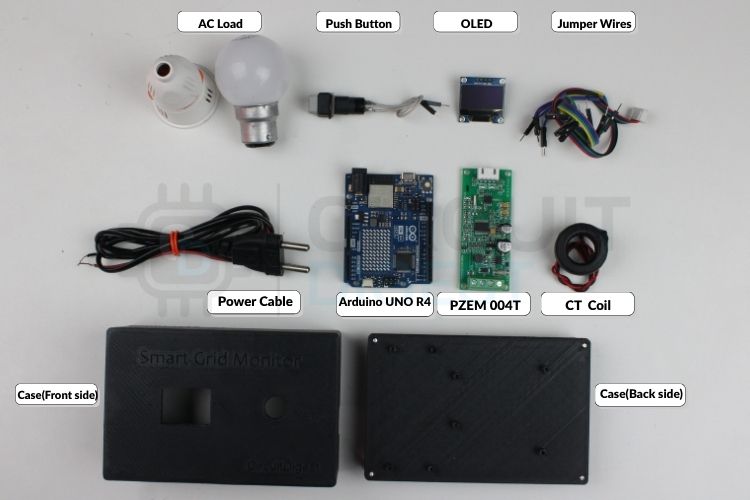
You will need the following components for this project:
- Arduino UNO R4 WiFi
- PZEM-004T Energy Meter
- Current Transformer Clamp
- 0.96-inch I2C OLED Display
- Push Button
- Jumper Wires
- Breadboard or PCB
- USB Cable
- AC Load for testing
The Arduino UNO R4 WiFi is an excellent choice because it combines a powerful Renesas RA4M1 microcontroller with built-in WiFi connectivity, eliminating the need for an external ESP8266 or ESP32 module.
Understanding the PZEM-004T
The PZEM-004T is a compact digital energy monitoring module designed for AC power measurement applications.
The module internally handles:
- RMS voltage calculation
- RMS current measurement
- Active power computation
- Energy accumulation
- Frequency detection
- Power factor calculation
A split-core current transformer safely measures load current without direct electrical contact, making the project safer and easier to build.
One major advantage of the PZEM module is that it communicates digitally through Modbus RTU, which significantly reduces firmware complexity and calibration work.
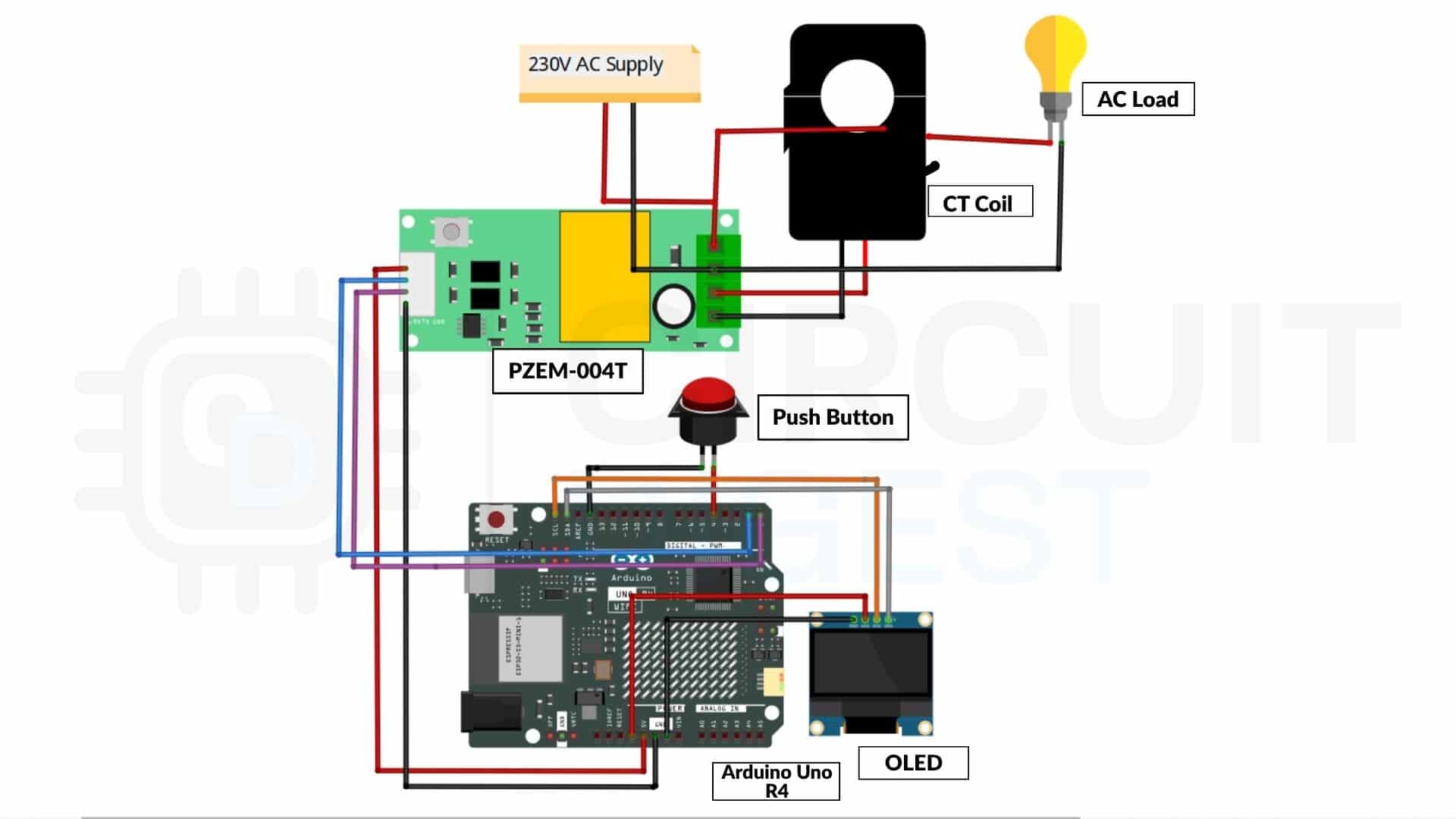
Wiring Overview
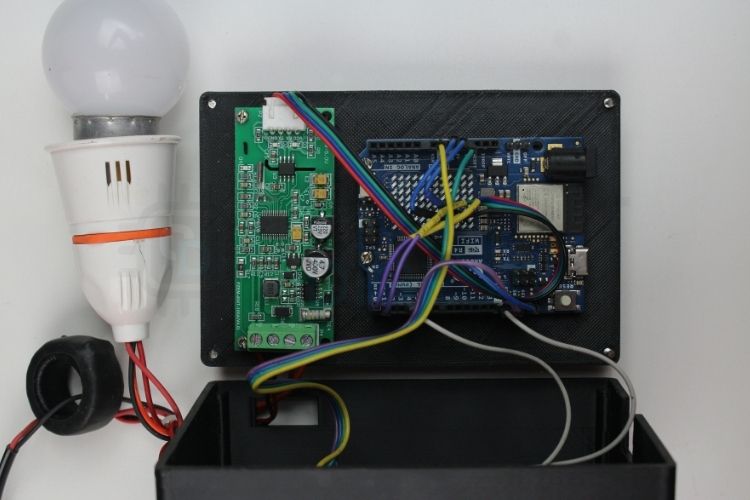
The PZEM-004T connects to the Arduino UNO R4 WiFi using the hardware serial interface.
Connections include:
- PZEM TX → Arduino RX
- PZEM RX → Arduino TX
- 5V → 5V
- GND → GND
The OLED display communicates through I2C using the SDA and SCL pins.
A push button can also be added to switch display pages or trigger additional functions.
Software and Libraries
The project uses standard Arduino libraries for:
- PZEM communication
- OLED graphics
- WiFi networking
- ThingSpeak cloud integration
Using dedicated libraries simplifies development because the firmware does not need to manually generate Modbus packets or calculate CRC values.
The Arduino UNO R4 WiFi reads all electrical parameters, formats the data, and periodically uploads the information to ThingSpeak.
Cloud Monitoring with ThingSpeak
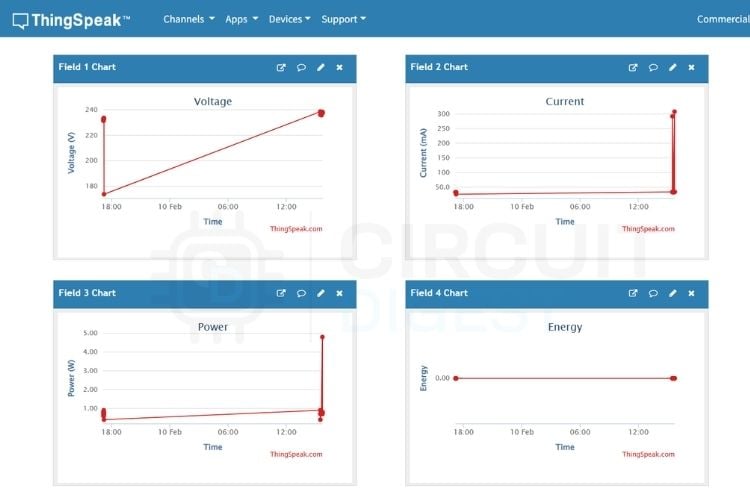
ThingSpeak acts as the cloud dashboard for this project.
Once connected to WiFi, the Arduino uploads:
- Voltage
- Current
- Power
- Energy
- Frequency
- Power factor
ThingSpeak automatically generates graphs and stores historical data for analysis.
This allows remote monitoring from anywhere using a browser or smartphone.
Cloud logging also makes it easier to identify long-term energy trends and unusual electrical behavior.
OLED Display Interface
The OLED display provides instant local feedback without requiring internet access.
The display can show:
- Voltage
- Current
- Power
- Energy consumed
- Frequency
- Power factor
- WiFi connection status
This makes the system useful even in offline environments.
Practical Applications
This project can be adapted for several real-world applications:
Home Energy Monitoring
Track appliance usage and reduce electricity waste.
Solar Power Systems
Compare solar generation against load consumption.
Industrial Equipment Monitoring
Detect abnormal current spikes and overload conditions.
Educational IoT Projects
Learn Modbus communication, cloud IoT, and embedded system design.
Predictive Maintenance
Identify unusual electrical behavior before equipment failure occurs.
Performance and Testing
During testing, the system successfully monitored electrical loads in real time while continuously uploading data to the cloud.
The OLED display updated instantly, while ThingSpeak generated live graphs for all measured parameters.
One of the most interesting observations was seeing voltage fluctuations and startup current spikes from inductive loads such as motors and power tools. Real-time visualization makes electrical behavior much easier to understand compared to traditional billing-based monitoring.
Expanding the Project
This project can be expanded further with:
- Relay-based load control
- SMS or email alerts
- Mobile app integration
- Multiple energy monitoring nodes
- MQTT cloud connectivity
- SD card data logging
- AI-based power analysis
- Renewable energy analytics
Because the design is modular, it is easy to scale and customize for larger IoT deployments.
Final Thoughts
This Arduino UNO R4 WiFi smart grid in IoT project demonstrates how modern embedded systems can combine sensing, local visualization, and cloud connectivity into one compact solution.
The combination of the Arduino UNO R4 WiFi and PZEM-004T makes energy monitoring surprisingly accessible, even for beginners. At the same time, the project remains powerful enough for advanced IoT experimentation and real-world monitoring applications.
Whether you are learning embedded systems, building a smart home dashboard, or experimenting with industrial IoT concepts, this project provides a solid foundation for energy analytics and remote monitoring.
You can explore more innovative embedded designs and connected solutions in these collections of Arduino projects and IoT projects and tutorials.