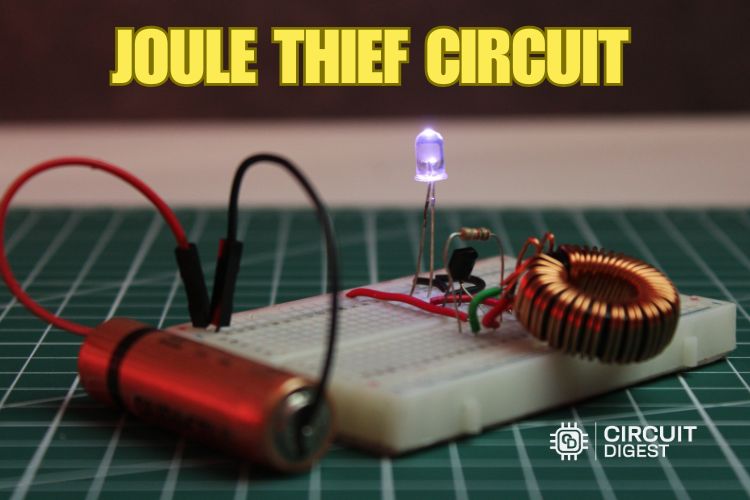
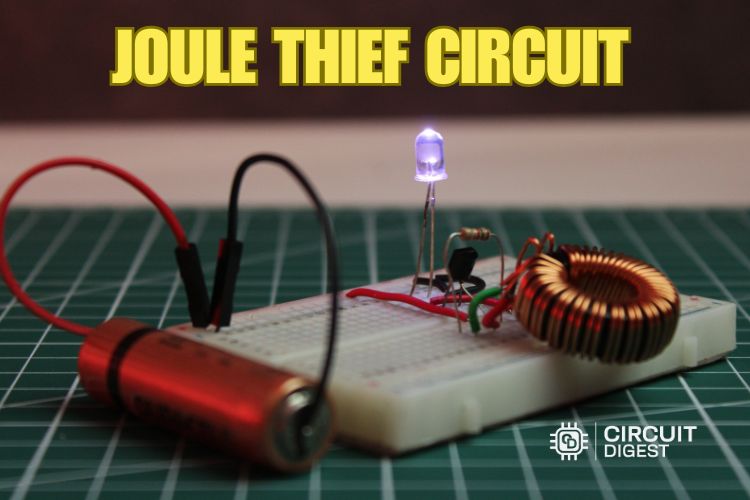
Unlock leftover battery power with this DIY Joule Thief voltage booster — light LEDs from nearly “dead” cells using simple components!
Joule Thief Circuit: Boost Low Batteries into Usable Power
Dead batteries aren’t always dead — and with a simple Joule Thief voltage booster, you can extract the last bit of usable energy from nearly depleted cells. This beginner-friendly project is perfect for makers, students, and electronics hobbyists who want to explore inductive switching, voltage boosting, and energy efficiency using only a few low-cost components.
In this tutorial, you’ll learn how to build a Joule Thief circuit from scratch and understand exactly how it works — all in under 15 minutes.
🔧 What Is a Joule Thief?
A Joule Thief Circuit is a self-oscillating boost converter that converts low DC voltage (as low as 0.6V) into higher voltage pulses capable of driving LEDs, small motors, or sensors. It’s widely used in ultra-low-power electronics and energy harvesting applications.
The name comes from its ability to “steal” the last joules of energy from batteries that would otherwise be thrown away.
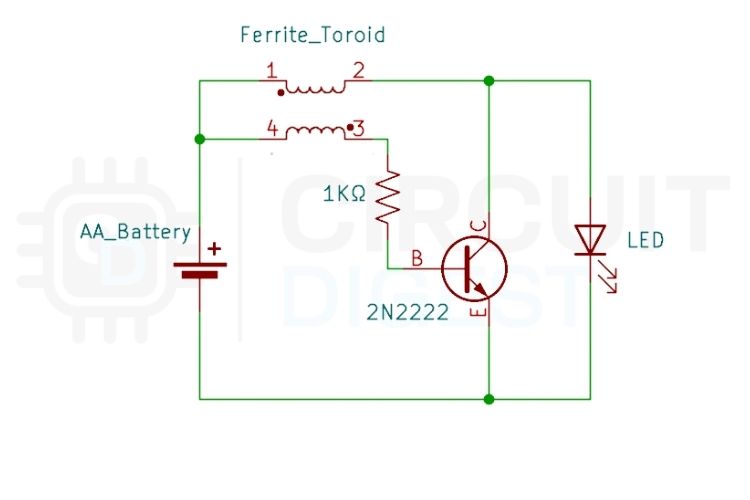
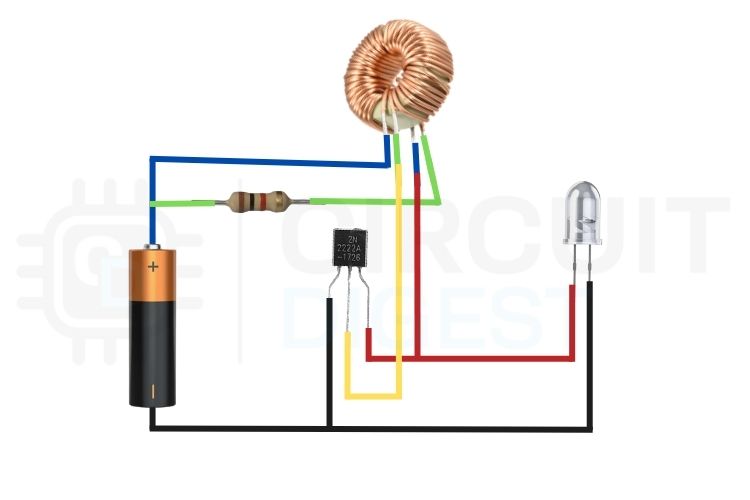
Joule Thief Circuit Diagram
The circuit uses two windings on a toroidal core — one for feedback and one for energy storage. The transistor rapidly switches ON and OFF, allowing the coil to build and collapse its magnetic field. Each collapse generates a voltage spike that powers the LED.
🛠 Step-by-Step Build Instructions
Step 1: Wind the Toroid
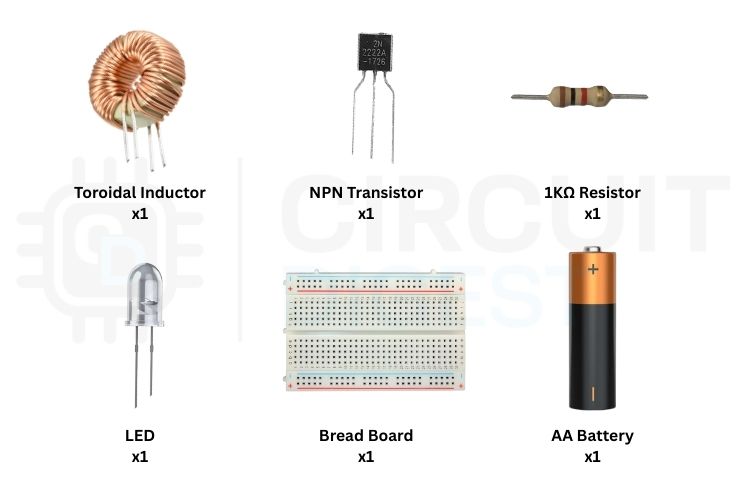
Take a toroidal ferrite core and wind two equal coils (about 8–10 turns each) using insulated copper wire. These will act as the primary and feedback windings.
Step 2: Connect the Transistor
Connect:
- Emitter → Battery negative
- Collector → One end of primary winding
- Base → Feedback winding through a 1kΩ resistor
Step 3: Add the LED
Connect the LED between the collector and battery positive.
Step 4: Power It Up
Insert a nearly dead AA battery — the LED should glow brightly, even below 1V.
🎉 Congratulations — your Joule Thief circuit is working!
How the Joule Thief Works
A small current flows into the transistor’s base, turning it ON.
Current flows through the coil, creating a magnetic field.
The feedback winding increases base current, pushing the transistor fully ON.
When the coil saturates, the transistor switches OFF suddenly.
The collapsing magnetic field generates a high-voltage pulse that lights the LED.
This cycle repeats thousands of times per second.
🚀 Applications
LED flashlights from depleted batteries
Solar garden lights
Emergency lighting systems
Energy harvesting projects
Educational electronics labs
📌 Final Thoughts
The Joule Thief is one of the most satisfying beginner electronics projects — simple, practical, and surprisingly powerful. Whether you're learning electronics fundamentals or building low-power devices, this tiny circuit delivers big insights.
Build it once — and you’ll never throw away a “dead” battery again.
If you enjoy experimenting with practical projects and learning how electronic circuits
work in real-world applications, this is an excellent hands-on build for makers and beginners alike.