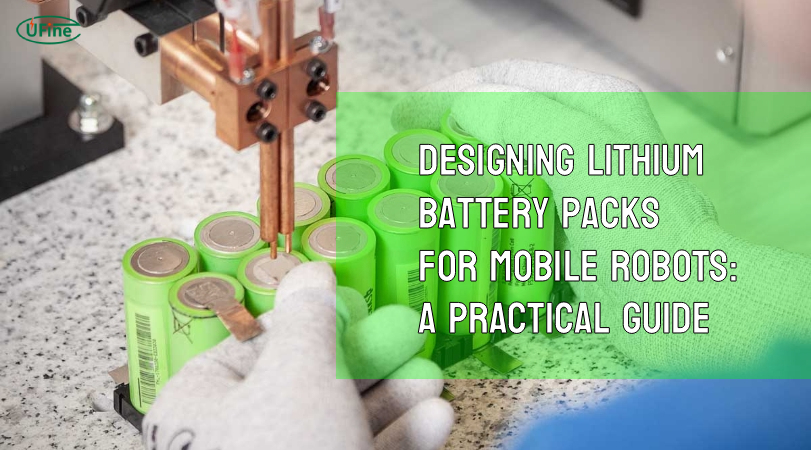
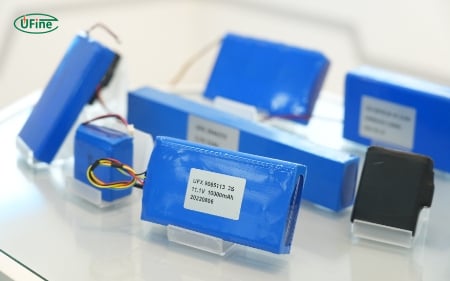
This project outlines the key steps in designing lithium battery packs for mobile robots, including voltage selection, cell choice, pack configuration, BMS integration, and thermal management to ensure reliable and efficient robot power systems.
Power systems are a fundamental part of any mobile robot. Whether you're building an autonomous delivery robot, an agricultural robot, or a warehouse AMR, the battery pack must provide stable voltage, high current capability, and long operational life.
This guide explains how engineers typically design lithium battery packs for mobile robots.
Step 1: Determine the Robot's Voltage Requirements
Most mobile robots operate on one of the following voltage systems:
| Voltage | Typical Applications             |
| ------- | -------------------------------- |
| 12V     | Small robots, hobby robotics     |
| 24V     | Service robots, mobile platforms |
| 36V     | Medium industrial robots         |
| 48V     | Industrial and heavy robotics    |
Higher voltage systems generally improve motor efficiency and power delivery.
Step 2: Choose the Right Lithium Cells
The most common lithium cells used in robotics include:
18650 Cells
Widely used in custom battery packs.
Advantages:
- Mature technology
- Reliable supply chain
- Good energy density
21700 Cells
Newer cells offering higher capacity and improved performance.
Advantages:
- Higher energy density
- Fewer cells required
- Lower internal resistance
LiFePO4 Cells
Often used in industrial robots due to:
- Long cycle life
- High thermal stability
- Enhanced safety
Step 3: Configure the Battery Pack
Battery packs are built using series and parallel configurations.
Example:
A 24V battery pack may use:
7 cells in series (7S)
multiple cells in parallel
This configuration determines both:
Proper pack design also ensures balanced current distribution.
Step 4: Integrate a Battery Management System
The BMS protects the battery and ensures safe operation.
Typical BMS features include:
- overcharge protection
- over-discharge protection
- short circuit protection
- temperature monitoring
- cell balancing
For robotics applications, the BMS may also provide communication interfaces such as CAN or UART.
Step 5: Consider Thermal Management
Robots often operate in environments where heat can accumulate.
Thermal design strategies include:
- aluminum battery enclosures
- heat dissipation structures
- temperature monitoring sensors
Effective thermal management helps extend battery lifespan.
Real-World Robot Battery Example
A typical warehouse AMR battery may have the following specifications:
- Voltage: 24V
- Capacity: 30Ah
- Cell type: 21700 lithium-ion
- Integrated smart BMS
- Cycle life: 2000+ cycles
Such systems are usually designed and assembled by specialized lithium battery manufacturers with experience in robotics applications.
Conclusion
Designing a reliable robot battery pack requires balancing multiple factors:
- energy density
- discharge rate
- safety
- mechanical design
By carefully selecting cells, pack configurations, and BMS systems, engineers can build battery solutions capable of powering robots for years of reliable operation.