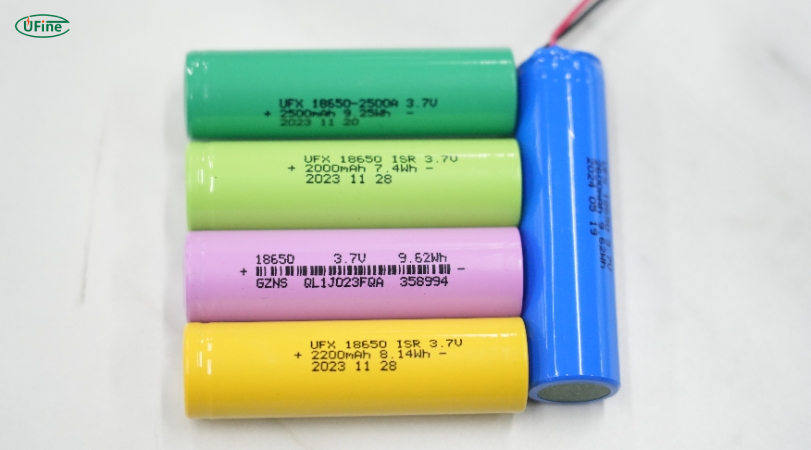
Designing a battery pack for power tools differs significantly from consumer electronics. The priority is not energy density, but delivering stable, high current under demanding conditions like load spikes, heat, and repeated cycles. This guide outlines key engineering considerations for building reliable, high-performance packs.
Designing a battery pack for power tools is fundamentally different from building packs for consumer electronics.
The challenge is not energy density — it’s delivering stable high current under harsh conditions.
This guide walks through real engineering considerations.
1. Defining the Load Profile First
Before selecting cells, define:
- Peak current (A)
- Continuous current (A)
- Duty cycle
- Ambient temperature range
Example (typical drill):
- Peak: 30A–60A
- Continuous: 15A–25A
Without this, cell selection is meaningless.
2. Cell Selection: High-Rate vs High-Capacity
For power tools, always prioritize:
👉 Low internal resistance + high discharge rating
3. Pack Configuration Strategy
Common structure:
- 5S (18V systems)
- 10S (36V systems)
Parallel groups should:
- Use identical batch cells
- Maintain IR deviation < 2–3%
Mismatch leads to early failure.
4. Busbar & Connection Design
Critical but often overlooked.
Poor design causes:
- Voltage drop
- Heat concentration
- Efficiency loss
Best practices:
- Nickel strip thickness optimization
- Short current paths
- Symmetrical layout
5. Thermal Management Engineering
Key principle:
👉 Heat must be controlled at the cell level, not just pack level
Methods:
- Cell spacing (not tightly packed)
- Thermal conductive materials
- Ventilation path design
Avoid:
- Fully sealed compact packs without heat escape
6. BMS Design for Power Tools
Unlike e-bikes or storage systems, power tools need:
- Fast response overcurrent protection
- Short-circuit resilience
- Minimal voltage lag detection delay
Optional upgrades:
- Active balancing
- Temperature-based current throttling
7. Safety Engineering
Must include:
- Insulation rings
- Fish paper barriers
- Proper spot welding (no soldering heat damage)
Failure here leads to:
- Internal short circuits
- Thermal runaway risk
Final Insight
A well-designed power tool battery pack is a balance of electrical, thermal, and mechanical engineering.
If you’re moving beyond prototyping, manufacturing consistency becomes the biggest challenge — and often requires collaboration with experienced battery pack suppliers.