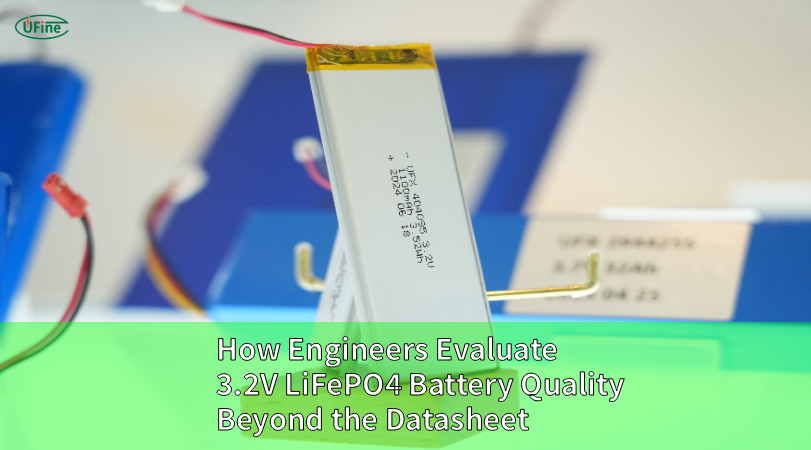
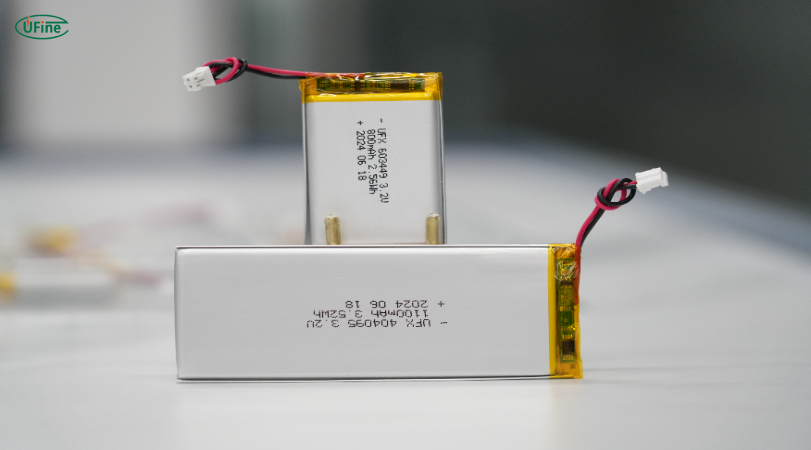
Learn how engineers evaluate 3.2V LiFePO4 battery quality through cell matching, BMS design, welding, and thermal management beyond datasheet specs.
Most battery datasheets look impressive.
Cycle life claims exceed 4000 cycles. Discharge rates appear stable. Capacity values look competitive.
But experienced engineers know that battery quality cannot be evaluated from specifications alone.
In real industrial environments, the difference between a reliable LiFePO4 battery and a low-quality pack usually appears months later — after repeated thermal cycling, continuous discharge stress, and environmental exposure.
This is especially true for 3.2V LiFePO4 battery systems used in:
- AGV robots
- solar energy storage
- marine electronics
- telecom backup systems
- industrial automation equipment
Why Cell Consistency Matters
One of the most overlooked aspects of lithium battery manufacturing is cell matching consistency.
Even small variations in internal resistance can create imbalance across a battery pack.
Over time, weaker cells become overstressed during charging and discharging cycles, causing:
- accelerated aging
- reduced usable capacity
- thermal hotspots
- voltage instability
High-quality manufacturers therefore perform multiple grading procedures before pack assembly.
These processes may include:
- capacity sorting
- internal resistance matching
- voltage screening
- aging tests
- load simulation
Without these procedures, pack-level reliability becomes difficult to maintain.
Welding Quality Directly Affects Battery Lifespan
Spot welding quality is another factor often ignored during supplier evaluation.
Poor welding introduces excessive resistance and localized heating under high-current discharge conditions.
In industrial systems operating continuously, these small defects gradually reduce battery efficiency and increase failure risk.
Automated laser welding systems are increasingly preferred in modern battery manufacturing because they improve:
- welding consistency
- conductivity
- vibration resistance
- long-term durability
BMS Design Is Application-Dependent
Many buyers mistakenly assume all Battery Management Systems are interchangeable.
In reality, BMS architecture should be customized according to application requirements.
For example:
Solar Storage Systems
Prioritize:
- cycle life optimization
- balancing efficiency
- low standby consumption
AGV Systems
Require:
- high current tolerance
- rapid response protection
- thermal monitoring
Needs:
- low-temperature charging protection
- waterproofing integration
- environmental resistance
This is why engineers increasingly work directly with a custom lithium battery manufacturer capable of adapting battery systems to specific operating conditions.
Needs:
- low-temperature charging protection
- waterproofing integration
- environmental resistance
This is why engineers increasingly work directly with a custom lithium battery manufacturer capable of adapting battery systems to specific operating conditions.
As industrial systems become more power-dense, thermal management becomes critical.
Poor thermal design accelerates:
- electrolyte degradation
- capacity fading
- BMS stress
- connector aging
Modern industrial-grade 3.2V LiFePO4 battery packs increasingly incorporate:
- aluminum heat dissipation structures
- thermal pads
- active temperature monitoring
- self-heating systems
This is particularly important in low-temperature environments where charging efficiency rapidly decreases.
As industrial systems become more power-dense, thermal management becomes critical.
Poor thermal design accelerates:
- electrolyte degradation
- capacity fading
- BMS stress
- connector aging
Modern industrial-grade 3.2V LiFePO4 battery packs increasingly incorporate:
- aluminum heat dissipation structures
- thermal pads
- active temperature monitoring
- self-heating systems
This is particularly important in low-temperature environments where charging efficiency rapidly decreases.
The Industry Is Moving Toward Engineering-Based Procurement
Five years ago, battery sourcing was largely price-driven.
Today, industrial buyers are becoming more technical.
Procurement teams now evaluate suppliers based on:
- engineering support
- manufacturing automation
- traceability systems
- QC procedures
- customization capability
- long-term reliability
As battery systems become central to industrial infrastructure, engineering quality increasingly determines operational stability.