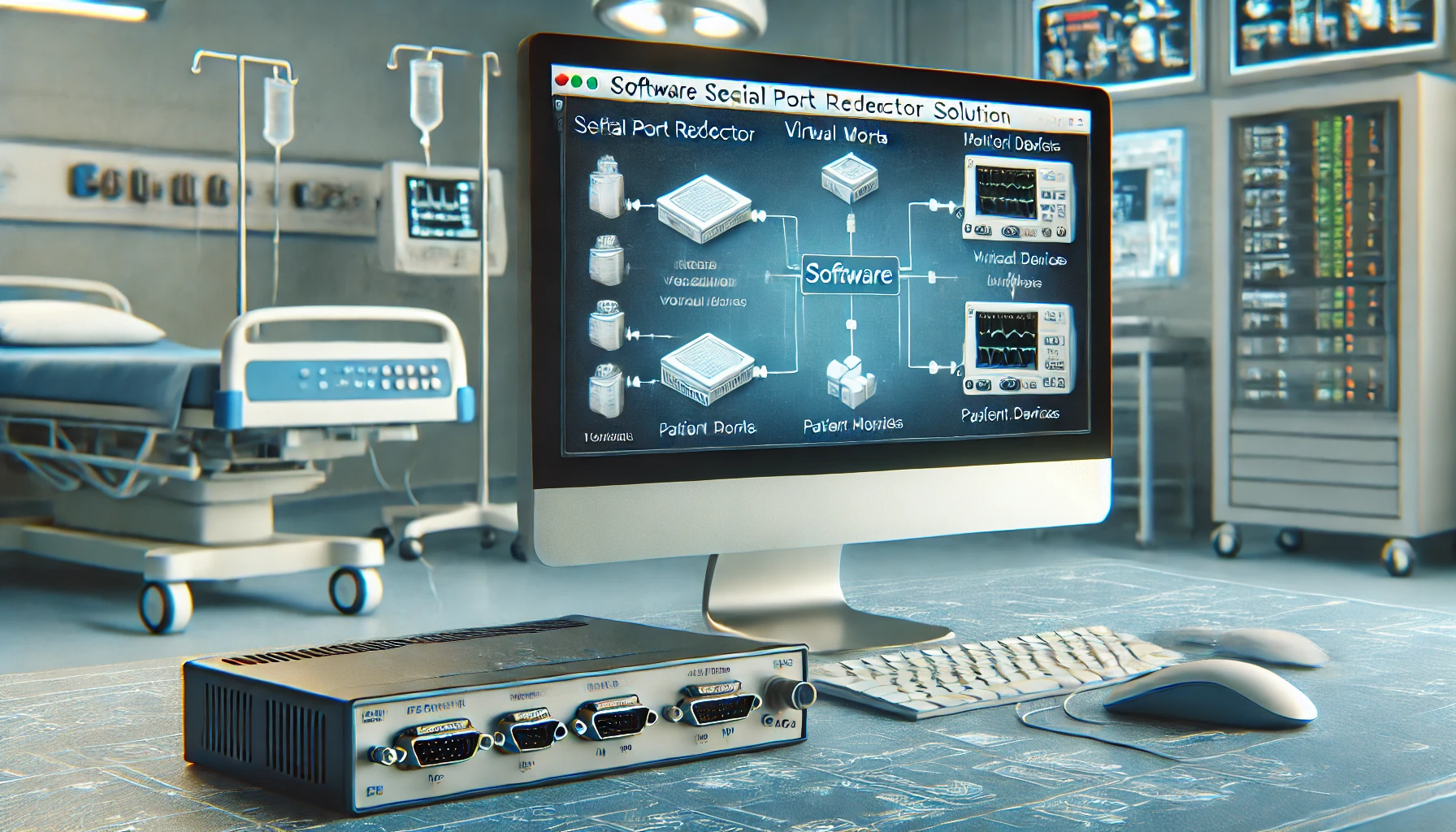
This article discusses integrating legacy serial devices like CNC machines and PLCs into modern IP networks using software solutions. Instead of relying on hardware Serial Device Servers, it highlights the benefits of software-based approaches, such as cost-effectiveness, flexibility, and scalability.
When dealing with legacy serial devices such as CNC machines, PLCs, or other industrial equipment, integrating these devices into modern IP networks can be challenging. Traditionally, hardware solutions like Serial Device Servers are used to bridge the gap between serial communication and network protocols. However, in some cases, a software-based solution might be more appropriate, particularly when hardware installation is impractical or cost-prohibitive.
This article explores how software solutions can be used to integrate legacy serial devices into modern networks, offering a flexible, scalable, and often more cost-effective alternative to hardware-based approaches.
What is a Software Serial Port Redirector?
A Software Serial Port Redirector is a program that allows serial devices to communicate over a network without the need for physical hardware like a Serial Device Server. It works by creating virtual serial ports on a computer, which are then mapped to remote serial devices over an IP network.
How It Works
The software operates by intercepting the data sent to a virtual COM port on the host computer and then forwarding this data over the network to the actual serial device, which could be connected to another computer. The serial device responds as if it were directly connected to the COM port on the original computer, allowing seamless communication.
Key Functions:
- Virtual COM Port Creation: The software creates virtual COM ports on the host system that mimic physical COM ports.
- Network Tunneling: Serial data is encapsulated and sent over the network to a remote device, where it is converted back into serial data.
- Protocol Support: Many software solutions support various serial communication protocols, such as RS-232, RS-422, and RS-485.
- Remote Access: Users can access and control serial devices from any networked location as if they were physically connected to the device.
User Case: Implementing a Software Solution for Remote Serial Device Access
The Challenge
A healthcare facility needed to integrate several legacy medical devices into their hospital information system (HIS). These devices, such as patient monitors and lab analyzers, used RS-232 communication and were previously connected directly to nearby computers. However, with the move to a centralized data management system, there was a need to access these devices from multiple locations throughout the hospital.
The facility faced the following challenges:
- Device Location: The medical devices were spread out across various departments, making direct hardware connections impractical.
- Cost Considerations: Installing hardware Serial Device Servers for each device was deemed too expensive and complex.
- Compliance Requirements: Any solution needed to meet strict healthcare data security and compliance standards.
The Solution: Software-Based Serial Port Redirection
The healthcare facility opted to use a software-based Serial Port Redirector, which offered a flexible and scalable solution for integrating medical devices into the hospital’s network.
1.Software Installation:
- The software was installed on both the local computers connected to the serial devices and the central server where the HIS was hosted.
- Virtual COM ports were created on the server, which were then mapped to the COM ports on the remote computers connected to the serial devices.
2.Configuration:
- The software was configured to establish a secure, encrypted connection between the virtual COM ports on the server and the physical COM ports on the remote computers.
- Each virtual port was assigned a unique identifier, making it easy for the HIS to recognize and communicate with the correct medical device.
3.Testing and Integration:
- After setup, the system was thoroughly tested to ensure that data from the medical devices was being accurately transmitted and received by the HIS.
- The software’s logging and monitoring features were utilized to track data flow and ensure compliance with healthcare regulations.
The Outcome
By using a software-based solution, the healthcare facility successfully integrated its legacy medical devices into the hospital’s centralized network. The benefits included:
- Cost Savings: Avoided the need for expensive hardware installations across multiple locations.
- Centralized Data Management: Enabled the HIS to collect data from various medical devices in real-time, improving patient care and operational efficiency.
- Remote Access: Allowed medical staff to access and control devices from any networked computer in the hospital, enhancing flexibility and responsiveness.
- Compliance and Security: The software’s encryption and secure communication features ensured that all data met the necessary compliance standards for healthcare environments.
Advantages of Software Solutions Over Hardware
- Flexibility: Software solutions can be easily reconfigured to meet changing needs, such as adding new devices or adjusting network settings.
- Scalability: As no additional hardware is required, expanding the system to include more devices is straightforward and cost-effective.
- Ease of Deployment: Without the need for physical hardware installation, deployment can be faster and less disruptive to ongoing operations.
- Cost-Effective: Eliminates the need to purchase and maintain additional hardware, reducing overall costs.
Conclusion
Software-based solutions for serial device integration provide a powerful alternative to hardware-based approaches, particularly in environments where flexibility, scalability, and cost-efficiency are crucial. Whether in healthcare, manufacturing, or other industries relying on serial communication, these software tools can bridge the gap between legacy systems and modern networks, enhancing operational efficiency and enabling remote access.
If you’re considering a software solution for your serial devices, or if you have experience with specific tools, join the discussion in the forum to share insights and get advice from experts in the field!