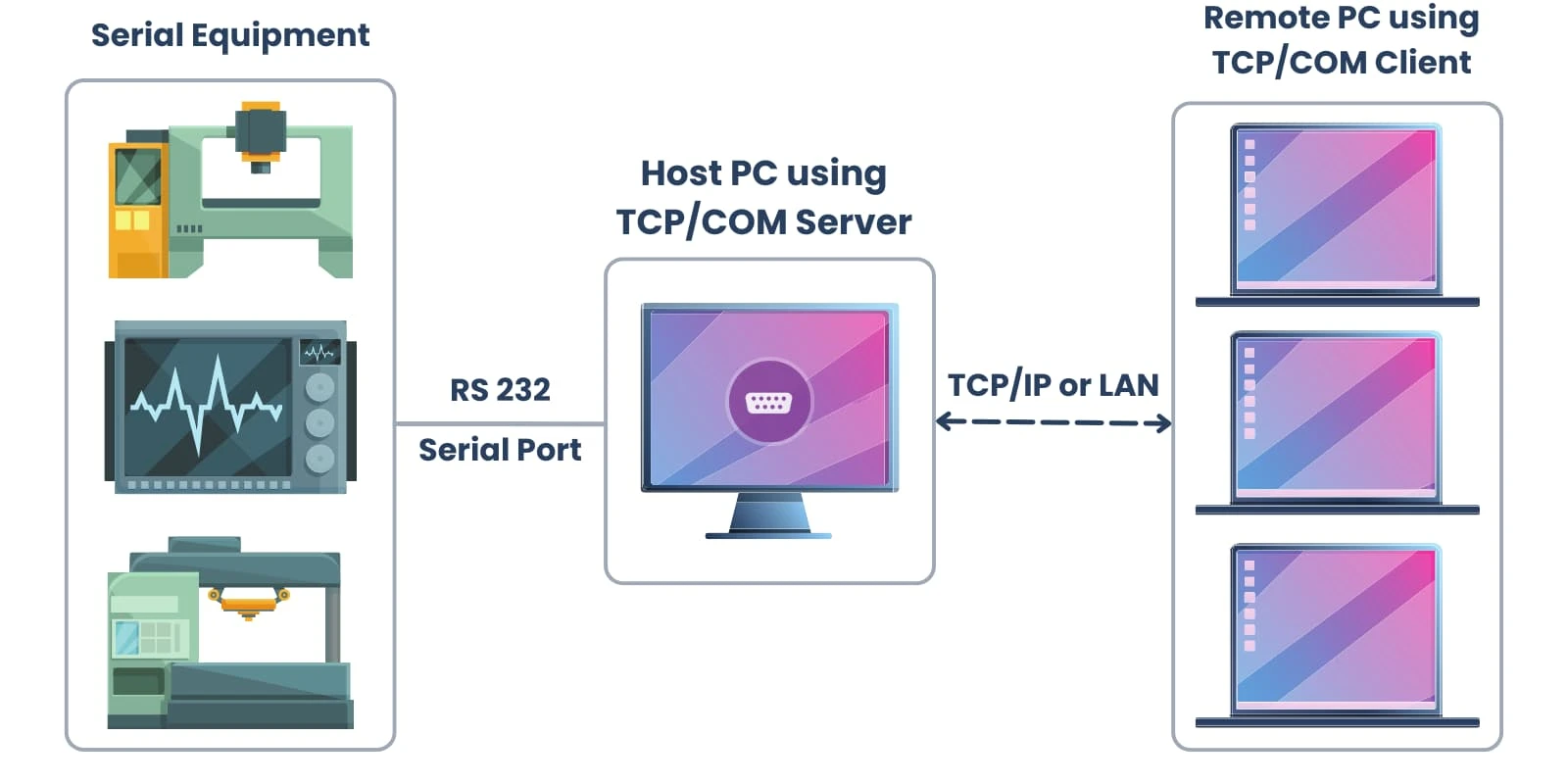
In today’s rapidly advancing tech world, Ethernet-based communication has become the gold standard for network connectivity. However, many industries still rely on older equipment that use RS232. This creates a challenge: How do you integrate these older, serial-based devices into modern, Ethernet-driven networks?
The Role of RS232 to Ethernet Converters
RS232 to Ethernet converters, also known as serial device servers, serve as a bridge between older RS232 equipment and modern Ethernet networks. These devices work by encapsulating RS232 data and transmitting it over a TCP/IP network, allowing remote devices to communicate with each other over LAN or even the Internet.
The process works as follows:
RS232 Data Encapsulation: The RS232 to Ethernet converter reads data from the serial device and encapsulates it into TCP or UDP packets.
Transmission Over Ethernet: These packets are sent across the Ethernet network, typically via a standard RJ45 Ethernet port.
Decapsulation: The data is received by a corresponding system or another converter, which decapsulates the packets and presents the original RS232 data to the recipient device.
Key Benefits of RS232 to Ethernet Converters
RS232 to Ethernet converters offer several benefits, especially in industrial settings where legacy equipment needs to be integrated into newer network infrastructures:
Increased Flexibility: By converting RS232 to Ethernet, users can remotely manage serial devices over local or wide area networks (LAN/WAN). This is particularly useful for monitoring and controlling devices from different locations, cutting down on the need for physical presence.
Longer Transmission Distances: While RS232 communication is limited to short distances, Ethernet networks can extend across entire buildings, campuses, or even cities. With proper routing, Ethernet can also connect RS232 devices across continents.
Cost-Effective Modernization: Upgrading old RS232-based systems to newer technologies can be expensive and complex. RS232 to Ethernet converters provide a simple and cost-effective way to integrate legacy devices into modern networks without needing to replace the entire infrastructure.
Improved Data Sharing: Ethernet allows multiple devices to communicate with a single RS232 device through IP networking, unlike the point-to-point limitation of RS232. This enables better data sharing and centralization in a networked environment.
Enhanced Network Monitoring: Many RS232 to Ethernet converters come with built-in management features, such as web-based configuration and SNMP support, allowing for enhanced network monitoring and troubleshooting.
Practical Applications of RS232 to Ethernet
RS232 to Ethernet converters are useful across various industries and applications. Here are some practical examples:
Industrial Automation: Many industrial machines still rely on RS232 for communication. Ethernet conversion allows remote monitoring and control of machines such as PLCs, CNC machines, and other factory equipment, increasing operational efficiency.
POS Systems: In retail, point-of-sale (POS) systems often use RS232 to connect to cash registers or barcode scanners. With RS232 to Ethernet conversion, retail stores can integrate their legacy POS systems into the broader IP network for centralized management.
Building Automation: Heating, ventilation, and air conditioning (HVAC) systems, security alarms, and access control systems in older buildings often rely on RS232 communication. RS232 to Ethernet converters enable these devices to be monitored and controlled over modern networks.
Healthcare: Medical devices such as lab equipment and patient monitoring systems still use RS232. RS232 to Ethernet converters can integrate these devices into hospital networks, improving data accessibility and monitoring capabilities.
Telecommunications: In telecommunications, RS232 is used in various transmission and network monitoring equipment. With Ethernet conversion, these devices can be remotely controlled and managed from centralized control centers.
How to Choose an RS232 to Ethernet Converter
When selecting an RS232 to Ethernet converter for your project, it’s essential to consider the following factors:
Number of Ports: Some converters offer multiple RS232 ports, allowing you to connect several devices to the same Ethernet interface.
Baud Rate Compatibility: Ensure that the converter supports the baud rates your RS232 devices use.
Protocol Support: Check if the converter supports the necessary protocols, such as TCP/IP, UDP, and raw socket communication, depending on your network needs.
Power Supply Options: Look for converters that support flexible power options, including PoE (Power over Ethernet), for easier installation in locations without dedicated power sources.
Management Features: Some converters include advanced features like web-based management, remote firmware upgrades, and SNMP monitoring, which can make system maintenance easier.
Conclusion
As Ethernet continues to dominate modern networking, the need to bridge the gap between legacy RS232 devices and modern networks is essential for many industries. RS232 to Ethernet converters provide a powerful, cost-effective solution, enabling seamless communication between old and new technologies.
Whether you’re modernizing an industrial automation system, upgrading a building’s security infrastructure, or integrating medical devices into a hospital network, RS232 to Ethernet converters offer a simple way to extend the life of your legacy equipment while taking advantage of modern networking capabilities.
With the right converter, your RS232 devices can easily communicate across vast distances, be managed remotely, and operate alongside the latest networked systems, bringing the best of both worlds into your projects.
This article offers an in-depth look at the importance and application of RS232 to Ethernet converters for Maker.pro readers interested in upgrading their projects to modern network standards while keeping legacy systems functional.