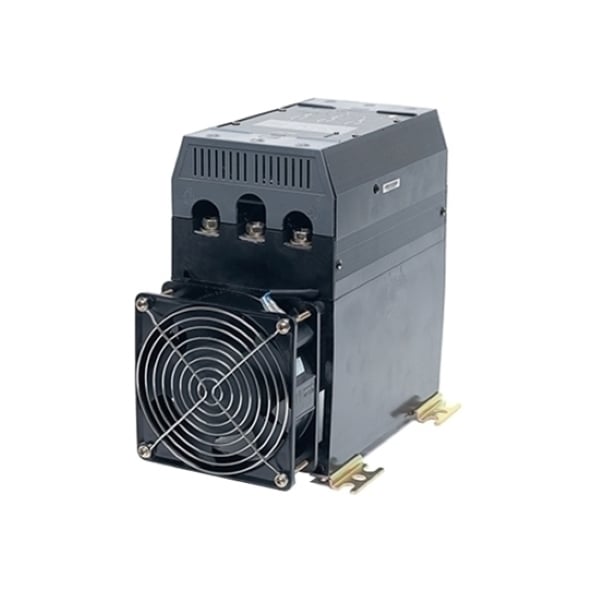
In industrial electrical systems, the power demand of a load can constantly change with temperature, production status, load variations, or control commands. Traditional switching methods can only control average power through frequent on/off switching, resulting in limited control accuracy and potentially significant power fluctuations. Power regulators, on the other hand, regulate AC output through power electronic control, allowing for more continuous power changes to the load. For industrial heating, automated equipment, electrical testing, and other applications requiring dynamic power control, this regulation method provides more flexible output management for the control system.
PowerHome power regulators cover single-phase, two-phase, and three-phase power systems. Different phase configurations can accommodate different AC power supply structures and load requirements. Single-phase power regulation is suitable for corresponding single-phase AC loads, while two-phase and three-phase regulation can be used for more complex industrial electrical systems and multi-phase load control. Through different phase configurations, PowerHome can cover industrial equipment, electrical control cabinets, automation systems, and other AC power regulation scenarios.
Types of Power Regulators
PowerHome SCR power regulators use SCRs (Silicon Controlled Rectifiers) as the main power control device, changing the AC power output by controlling the conduction state of the SCRs. The control circuit generates corresponding trigger signals based on input commands, causing the SCR to operate according to the set control logic, thereby regulating the AC power supplied to the load. Because the SCR can respond quickly to control signals, it is suitable for industrial loads that require continuous changes in AC power. The SCR power regulator can be used in resistance heating, industrial temperature control, automation equipment, and other systems requiring AC power regulation.
The PowerHome AC power regulator is designed for AC power regulation applications, enabling AC output control according to system requirements. Through appropriate control methods, the AC power regulator can dynamically adjust the output voltage or power to maintain coordination with the load's operating state. For devices requiring changes in AC input conditions, the power regulator offers a more flexible control method than a fixed voltage power supply and is easy to integrate into automation control systems.
Output Signals OF Power Regulators
Regarding control interfaces, the PowerHome power regulator supports various common analog control signals, including 4–20mA, 0–5V, and 0–10V. These signals are widely used in PLCs, industrial controllers, temperature controllers, and automation systems. By connecting external control signals to the power regulator, the control system can send corresponding adjustment commands based on actual operating parameters. For example, in industrial heating systems, PLCs can adjust output power based on temperature changes; in automated equipment, they can change AC output according to load conditions, enabling closer coordination between power control and equipment operation.
4–20mA is a common analog signal format in industrial automation, characterized by long transmission distances and strong anti-interference capabilities, making it suitable for industrial field control. 0–5V and 0–10V are commonly used for analog control between controllers and power regulators. PowerHome power regulators, by providing these control interfaces, can be more easily integrated into existing industrial control architectures without requiring independent manual adjustment.
Applications of Power Regulators
In terms of application scope, power regulators can be used in industrial heating equipment, temperature control systems, automated production equipment, electrical testing equipment, power control systems, and other applications requiring continuous AC output regulation. In these applications, the power regulator not only provides electrical energy but also plays a crucial role in controlling the output state. Through external control signals and internal power control circuitry, the power regulator can serve as the connection point between a PLC or automated control system and a high-power AC load.
PowerHome is a professional electrical equipment supplier offering a variety of power regulator solutions, including SCR power regulators and AC power regulators, supporting single-phase, two-phase, and three-phase power systems. They support control modes such as 4–20mA, 0–5V, and 0–10V, meeting diverse power control needs in industrial control, electrical regulation, and automation equipment. Through continuous AC voltage and power regulation, PowerHome power regulators can meet the controllable power output requirements of various industrial systems and provide flexible power management and electrical control solutions for automation equipment.