Project Description
The proposed project aims to develop an electronic nose (e-nose) system as an intelligent tool for improving quality control in coffee production. The system leverages a combination of gas sensor arrays and machine learning algorithms to analyze volatile organic compounds (VOCs) that are released during critical post-harvest processes such as fermentation, drying, and roasting. These VOCs play a vital role in determining the aroma and flavor profile of coffee, which are key indicators of product quality.
The e-nose will be designed to detect and interpret aroma “fingerprints” characteristic of high-quality coffee and to identify potential defects at an early stage. By capturing sensor data in real time and processing it through advanced data analytics, the system will enable continuous monitoring of production processes and objective evaluation of coffee aroma — reducing reliance on subjective human cupping assessments.
The integration of machine learning models will further enhance the e-nose’s capability to classify aroma profiles, predict process deviations, and optimize post-harvest parameters. This approach ensures greater consistency across batches, supports traceability, and contributes to value addition in the specialty coffee sector.
Ultimately, the project will deliver a cost-effective, non-invasive, and rapid quality assessment platform that empowers coffee producers with actionable insights, improves product uniformity, and strengthens competitiveness in high-value markets.
Our project builds an Electronic Nose (E-nose) — a smart device that can “smell” coffee just like a professional cupper, but faster, more consistent, and completely digital.
Using an array of gas sensors, the e-nose captures the volatile organic compounds (VOCs) released during coffee processing — from fermentation and drying to roasting. Each coffee sample produces a unique “aroma fingerprint,” which the system learns to recognize. By applying machine learning, it can classify different aroma profiles, detect defects, and even predict quality in real time.
Why it’s cool? Because it turns something as complex and subjective as aroma evaluation into quantitative, traceable data. No more relying solely on human perception — the e-nose brings objectivity to coffee cupping. It helps producers monitor and control flavor development, ensure batch-to-batch consistency, and enhance traceability in the specialty coffee supply chain.
In short, it’s like giving coffee farmers and roasters their own AI-powered sensory assistant — one that never gets tired, never biased, and keeps the art of coffee aligned with the science of data.
Electronic Nose System
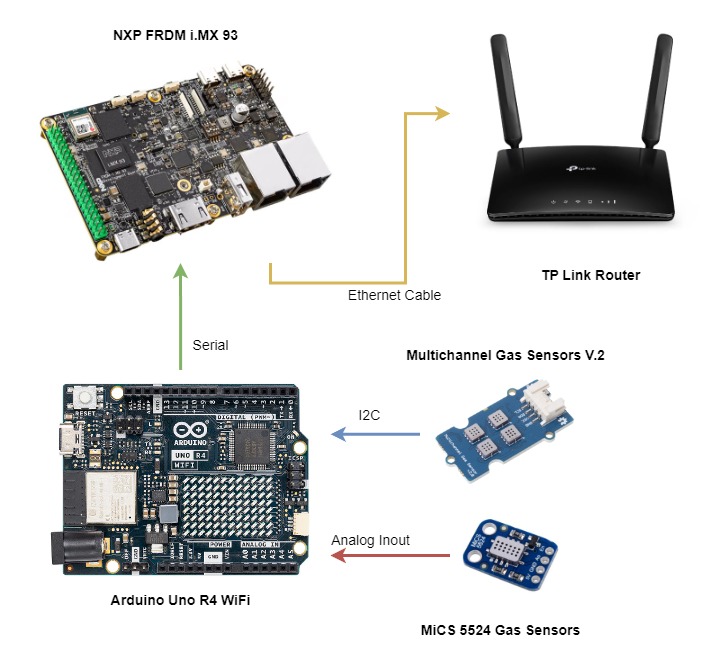
The system integrates multiple hardware components to develop a smart electronic nose (e-nose) for coffee aroma profiling. The Arduino Uno R4 WiFi functions as the data acquisition unit, collecting sensor signals from two types of gas sensors: the MiCS-5524 Gas Sensor, which provides analog input, and the Multichannel Gas Sensor V2, which communicates via the I2C interface.
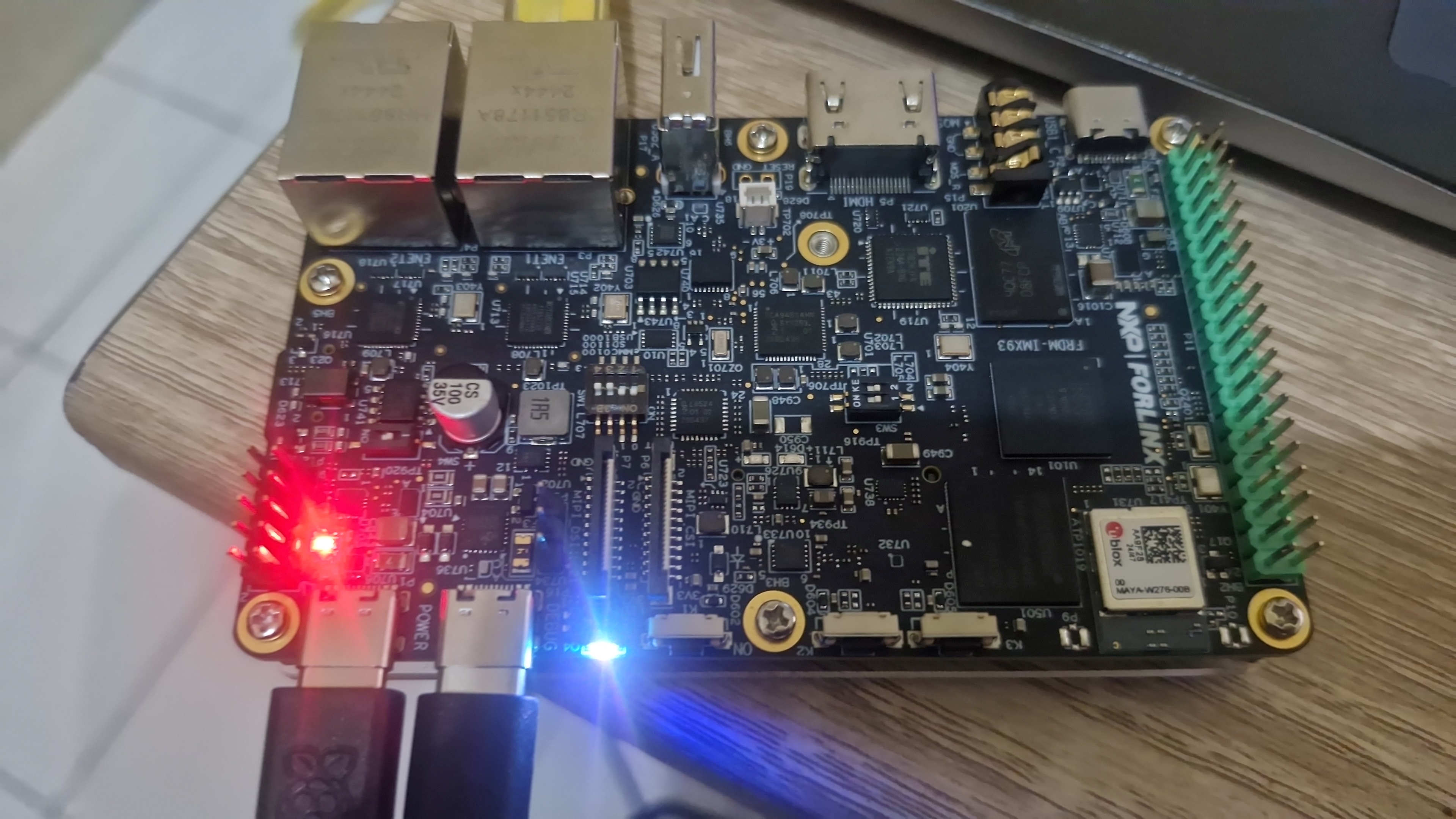
The acquired gas concentration data are then transmitted through a serial connection to the NXP FRDM i.MX 93 development board. This board serves as the data processing and machine learning unit, where sensor readings are analyzed to classify aroma patterns and identify key volatile compounds.
For network connectivity, the NXP FRDM i.MX 93 board connects to a TP-Link router via Ethernet, enabling data transfer, model updates, and remote monitoring.
This architecture allows the system to perform real-time data acquisition, processing, and intelligent classification, forming the foundation of an embedded machine learning–based e-nose platform for coffee quality evaluation.
System Connection and Hardware Setup
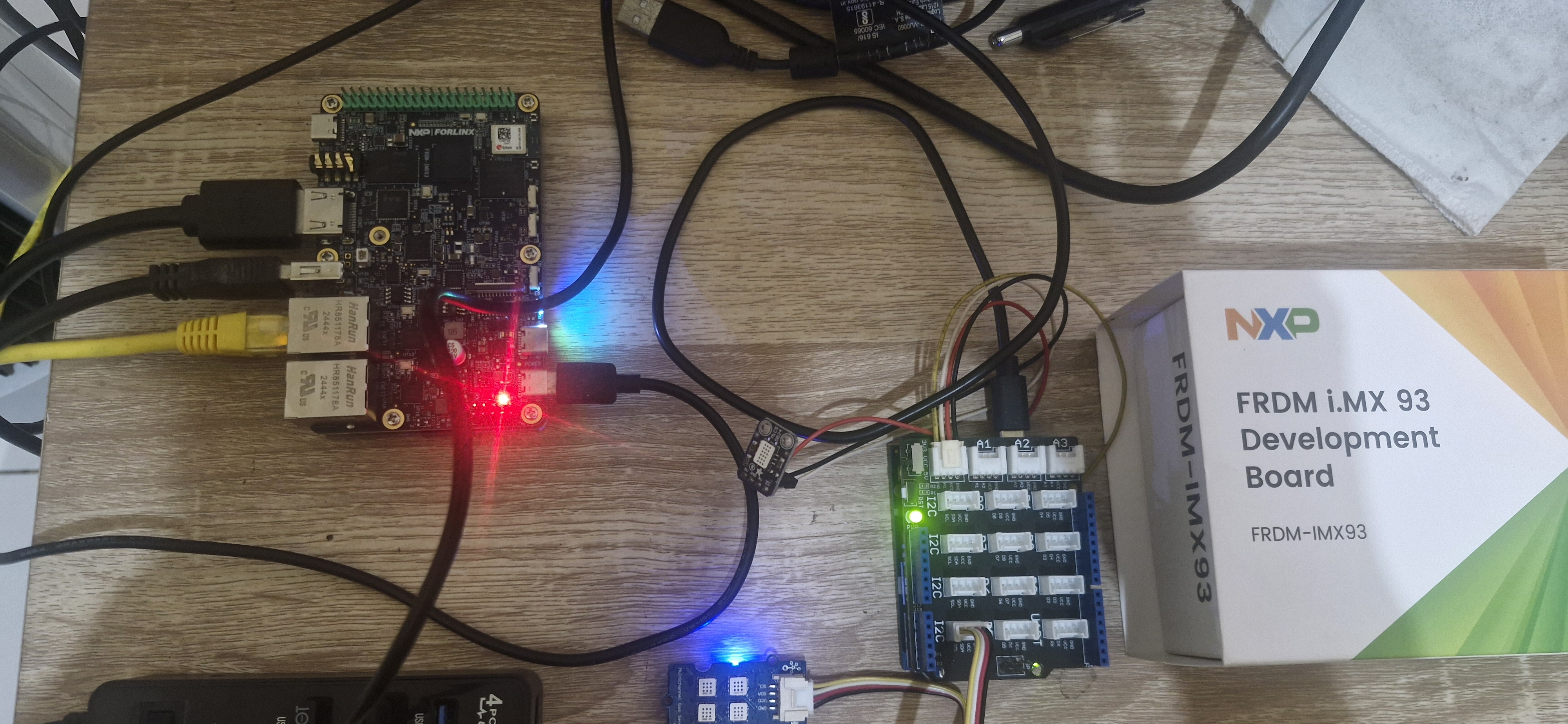
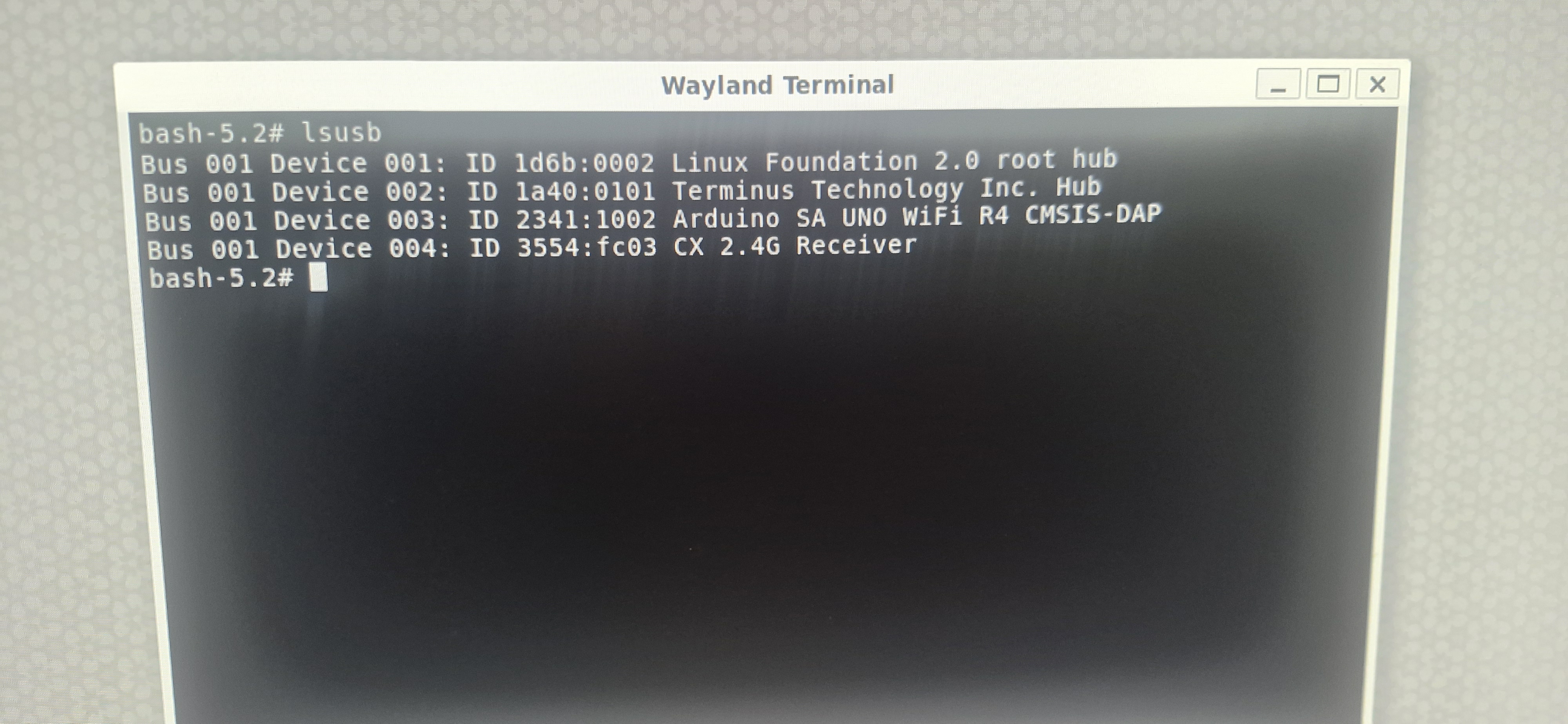
The images illustrate the hardware setup and connection process between the Arduino Uno R4 WiFi and the NXP FRDM i.MX93 Development Board for the electronic nose (e-nose) system.
In the first image, the Wayland terminal displays the output of the lsusb command, confirming that the Arduino Uno R4 WiFi has been successfully recognized by the NXP FRDM i.MX93 board through the USB interface. The device is listed as “Arduino SA UNO WiFi R4 CMSIS-DAP”, indicating proper USB communication and readiness for serial data exchange.
The second image shows the complete hardware configuration. The Arduino Uno R4 WiFi is connected to multiple gas sensors — including the MiCS-5524 gas sensor (analog input) and the Multichannel Gas Sensor V2 (I2C interface) — for real-time data acquisition. The Arduino transmits sensor readings to the NXP FRDM i.MX93 board via a serial connection, where the data are processed using machine learning algorithms. The NXP board is also connected to a TP-Link router through an Ethernet cable, enabling network communication and remote access.
This setup demonstrates the integration of sensor acquisition, embedded processing, and connectivity — forming the core architecture of an AI-powered e-nose system for coffee aroma profiling.