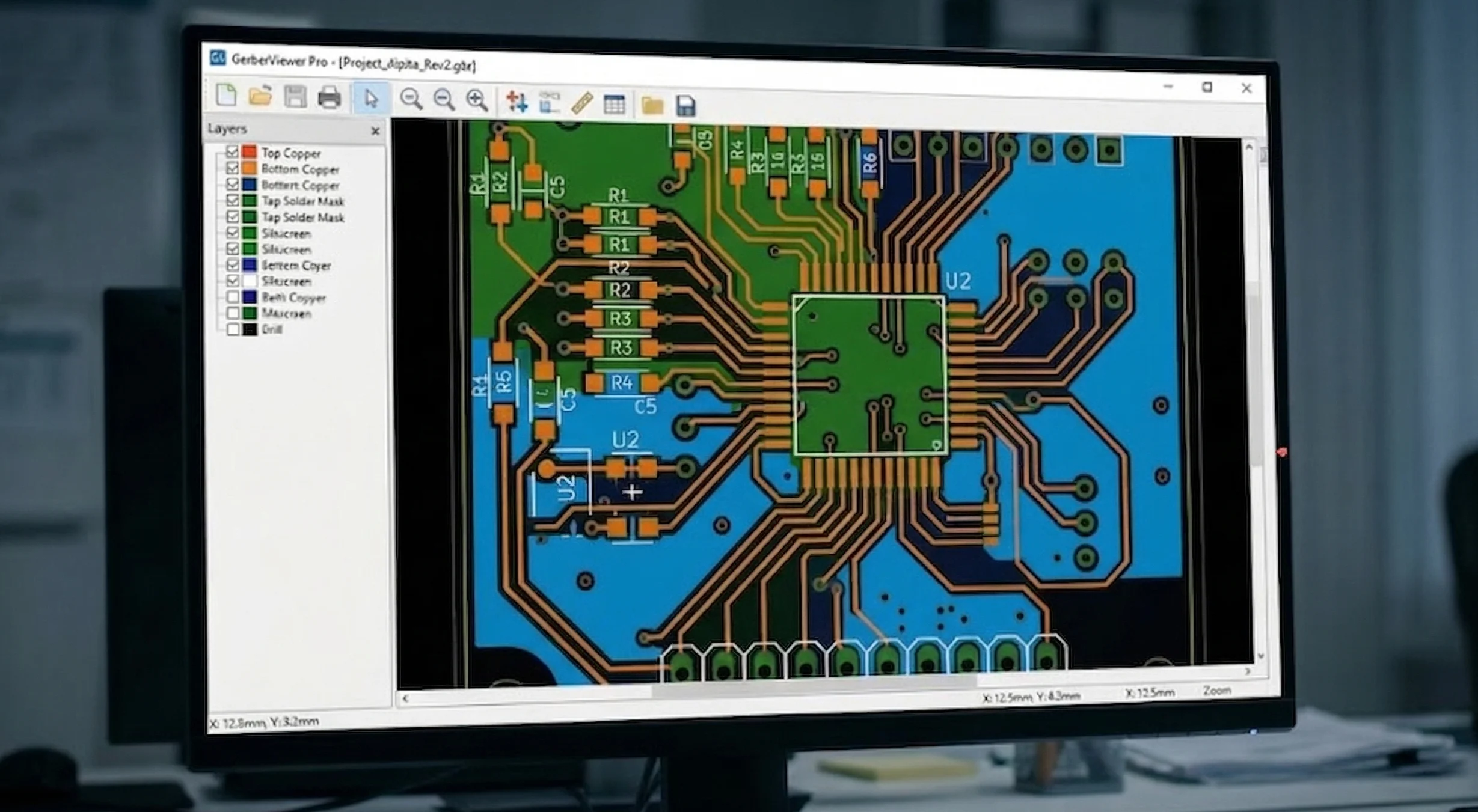
A layout may look perfect inside CAD software and still create unnecessary complications once it reaches the production floor. This is exactly why DFM for SMT Assembly has become such an important part of modern PCB manufacturing. It helps ensure that boards are not only electrically functional but also easy to fabricate, assemble, inspect, and deliver on time.
Understanding DFM for SMT Assembly
DFM stands for Design for Manufacturability. In SMT assembly, it refers to designing printed circuit boards in a way that supports smooth and efficient manufacturing under real factory conditions.
The focus is not only on whether the board works electrically. It is also about whether the design can move through stencil printing, pick-and-place assembly, reflow soldering, and inspection without creating avoidable production problems.
Small design decisions can have a major impact during manufacturing. Component spacing, footprint quality, pad dimensions, fiducial placement, and panel handling all influence how efficiently a PCB can be assembled.
A board may technically pass design validation while still being difficult to manufacture. Tight component spacing, incorrect footprints, or poor orientation can lead to assembly errors, inspection challenges, and production slowdowns. DFM helps identify these issues before fabrication even begins.
Why DFM Matters in PCB Manufacturing
Many PCB delays are not caused by machine failures or material shortages. They often happen because the board design itself creates obstacles during assembly.
When a design lacks proper DFM consideration, production teams may need to pause the assembly line to review unclear placements, adjust machine settings, or manually inspect difficult sections of the board. These interruptions increase lead time and create additional costs.
DFM for SMT Assembly helps eliminate these unnecessary disruptions by ensuring the board is optimized for manufacturing from the beginning.
A manufacturing-friendly design usually leads to:
- Faster assembly processes
- Reduced production errors
- Lower rework requirements
- Improved solder joint reliability
- Better inspection accuracy
- Shorter turnaround times
This becomes especially important for projects requiring both PCB fabrication and assembly under tight schedules. A problem discovered during assembly can quickly affect the entire production timeline.
How DFM Helps Reduce Lead Time
Lead time in PCB manufacturing is not only about machine speed. It is largely influenced by how smoothly the board moves through each production stage.
When the design is optimized for manufacturing, the board passes through printing, component placement, reflow, and inspection with fewer interruptions. Operators spend less time resolving assembly issues, and engineers do not need repeated design clarifications.
Without proper DFM checks, even minor issues can slow production significantly. A misplaced footprint or poor spacing between components can create soldering defects that require rework and additional inspection.
DFM for SMT Assembly reduces the chances of these delays by addressing potential manufacturing problems early in the design process.
This proactive approach improves workflow consistency and helps manufacturers maintain stable production schedules while delivering higher-quality boards.
Important DFM Checks Before SMT Assembly
Several key areas should always be reviewed before sending a PCB into manufacturing.
Component Spacing
Components placed too close together can interfere with automated placement machines and make soldering more difficult. Adequate spacing improves placement accuracy and allows proper inspection after assembly.
Footprint and Pad Design
Incorrect footprints are one of the most common causes of assembly issues. Poorly designed pads can result in component misalignment, weak solder joints, or tombstoning during reflow.
Fiducial Placement
Fiducials help pick-and-place systems align the PCB accurately during assembly. Missing or poorly placed fiducials can reduce placement precision and increase the risk of assembly defects.
Component Orientation
Consistent component orientation simplifies automated assembly and inspection processes. Mixed orientations often slow production and increase the possibility of placement errors.
Panelization and Board Handling
Good panel design improves handling efficiency during SMT assembly. Poor panelization can lead to board stress, alignment problems, and difficulties during depaneling.
Common DFM Issues in SMT Assembly
Some manufacturing problems appear repeatedly across different PCB projects.
One of the most common is excessive component density. Designers often try to save board space by placing components too closely together, but this can create placement and inspection difficulties during assembly.
Incorrect footprints are another major issue. Even small dimensional inaccuracies can affect solder quality and placement accuracy, leading to defects that are difficult to detect early.
Inspection accessibility also plays a critical role. A PCB should not only be easy to assemble but also easy to inspect. If solder joints, test points, or markings become difficult to access, quality control takes longer and production slows down.
These issues highlight why DFM for SMT Assembly is so valuable for companies seeking reliable printed circuit board assembly services. The goal is not simply to complete assembly, but to achieve clean, efficient production with minimal rework and delays.
The Long-Term Value of DFM
DFM is not just a manufacturing checklist. It is a strategy that improves communication between design and production teams.
When engineers design boards with manufacturing realities in mind, assembly becomes smoother, defect rates decrease, and production timelines become more predictable.
Early DFM review also helps reduce overall project costs. Identifying manufacturing issues before fabrication is always faster and less expensive than correcting them after production begins.
As PCB designs continue becoming smaller and more complex, the importance of DFM for SMT Assembly will only continue to grow.
Conclusion
DFM for SMT Assembly is one of the most effective ways to improve PCB manufacturing efficiency. A board designed with manufacturing in mind is easier to assemble, easier to inspect, and far less likely to create unexpected delays during production.
Instead of treating DFM as a final review step, it should be integrated into the design process from the beginning. Early manufacturing analysis helps reduce errors, improve quality, and keep production schedules on track.
At PCB Power, DFM checks help identify potential assembly challenges before they affect fabrication or SMT production. Reviewing your PCB design early can make a significant difference in both turnaround time and final product reliability.
Know More: https://www.pcbpower.us/blog/dfm-for-smt-assembly