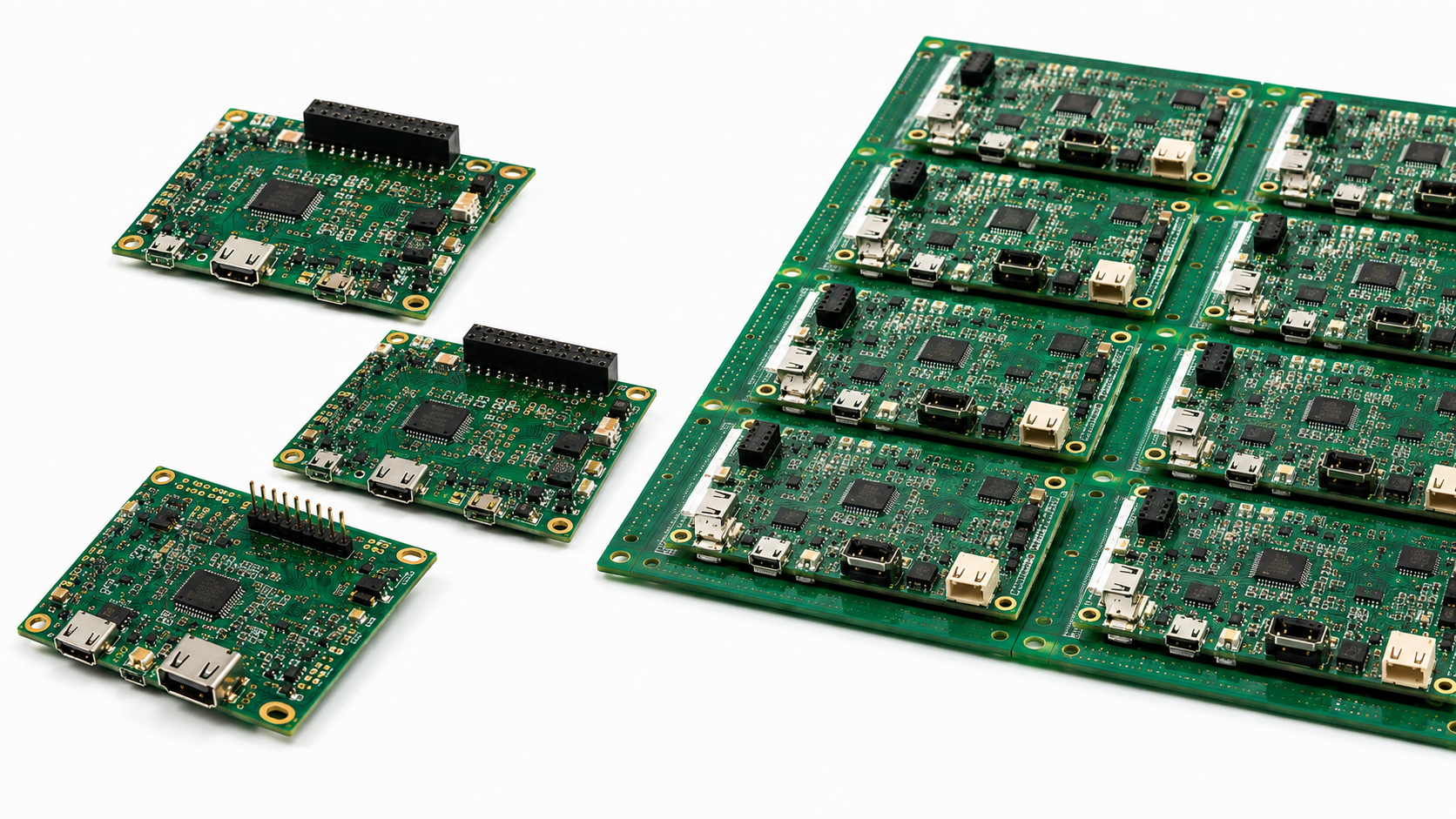
That’s why understanding the difference between prototyping and production manufacturing is essential for engineers, startups, and OEMs developing advanced electronic products.
Whether you are building IoT devices, industrial automation systems, medical electronics, or automotive control units, selecting the right pcb prototype fabrication service plays a major role in determining product quality, production scalability, and time-to-market success.
Understanding PCB Prototyping in Electronics Development
PCB prototyping is the process of manufacturing a limited number of circuit boards for testing, design validation, and engineering analysis. At this stage, the primary focus is functionality rather than manufacturing efficiency.
Engineers typically use prototype boards to evaluate:
- Circuit performance
- Signal integrity
- Thermal behavior
- EMI/EMC compliance
- Mechanical compatibility
- Firmware integration
A reliable pcb prototype fabrication service allows development teams to identify design flaws early before committing to expensive tooling or large-scale manufacturing investments.
Most prototype printed circuit boards are produced in small quantities with fast turnaround times. Rapid iteration is critical because engineers often need multiple revisions before finalizing the design. Flexibility and speed are prioritized over production-level cost optimization.
How Production Manufacturing Differs
Once a design has been validated, the manufacturing process shifts toward scalability and consistency. Production manufacturing focuses on:
- Manufacturing repeatability
- Yield optimization
- Supply chain stability
- Assembly automation
- Cost efficiency
- Long-term product reliability
At production scale, even small inefficiencies can affect profitability and product quality. A PCB layout that works perfectly during prototyping may still create yield losses or assembly issues during mass production.
This is where an experienced pcb prototype fabrication service becomes highly valuable. Manufacturers with expertise in both prototyping and production can identify potential scalability concerns during the early development phase, reducing future redesign costs.
Speed vs Manufacturing Optimization
One of the biggest differences between prototyping and production is the balance between speed and process optimization.
Prototype manufacturing is designed for rapid engineering validation. The setup is streamlined to deliver boards quickly with flexible process tolerances. Engineers can test functionality, modify layouts, and continue product development without long delays.
Production manufacturing, however, focuses heavily on process control and repeatability. Manufacturers optimize:
- Panel utilization
- Drill cycles
- Assembly programming
- Material usage
- Inspection workflows
The goal is to maintain consistent product quality while maximizing manufacturing efficiency.
Cost Per Board vs Overall Development Cost
Many businesses assume prototype boards are expensive because of their higher per-unit pricing. In reality, investing in a professional pcb prototype fabrication service often reduces total product development costs.
High-quality prototype printed circuit boards help engineers identify issues such as:
- Incorrect footprints
- Thermal failures
- Power integrity problems
- Stack-up inconsistencies
- Signal degradation
Skipping the prototyping stage can lead to expensive production respins and delayed product launches.
In production manufacturing, larger volumes reduce the cost per board significantly. However, tooling expenses, setup costs, and inventory management become important financial considerations.
Material Selection Challenges
During prototyping, engineers may prioritize material availability and faster lead times. In production manufacturing, material selection becomes far more critical.
Manufacturers must evaluate:
- Thermal performance
- Moisture resistance
- Mechanical durability
- Regulatory compliance
- Long-term reliability
An experienced pcb prototype fabrication service helps ensure prototype materials align closely with future production requirements.
For example, a high-frequency application may initially use standard FR4 materials during prototyping. Later, production scaling may require Rogers or hybrid laminates for better signal performance. Without proper early validation, these material changes can introduce impedance mismatches or signal integrity issues.
Design for Manufacturability (DFM)
Prototype designs are often created with functionality as the primary goal, but production manufacturing requires stronger Design for Manufacturability (DFM) practices.
Key DFM considerations include:
- Minimum annular ring sizes
- Copper balancing
- Via reliability
- Component spacing
- Automated assembly compatibility
- Panel optimization
A trusted pcb prototype fabrication service evaluates these factors early to ensure the design can transition smoothly into full-scale production.
Designs that function correctly in prototype form may still fail during automated production if manufacturability is overlooked.
PCB Fabrication and Assembly at Scale
Assembly complexity increases significantly during production manufacturing.
Prototype assemblies may rely on manual soldering or semi-automated processes. Production environments depend heavily on automated assembly systems and strict quality control procedures.
Production assembly may involve:
- Reflow profile optimization
- Pick-and-place programming
- Automated Optical Inspection (AOI)
- X-ray inspection for BGAs
- Solder paste consistency control
An experienced pcb fabrication and assembly provider helps ensure the design is optimized for scalable automated manufacturing.
Supply Chain Stability Matters
Prototype sourcing often focuses on component availability and rapid procurement. Production manufacturing requires long-term supply chain planning.
Manufacturers must consider:
- Component lifecycle management
- Alternate sourcing strategies
- Volume procurement planning
- Inventory forecasting
Global semiconductor shortages highlighted how supply chain instability can disrupt electronics production. A professional pcb prototype fabrication service can help identify sourcing risks before production scaling begins.
Why Production-Intent Prototypes Are Important
One of the most common engineering mistakes is treating prototypes as temporary experiments rather than production-intent designs.
Prototype printed circuit boards should ideally validate:
- Electrical performance
- Thermal behavior
- Mechanical integration
- Assembly workflows
- Product testability
The closer a prototype matches real production conditions, the smoother the manufacturing transition becomes.
Final Thoughts
PCB prototyping and production manufacturing serve different purposes, but they are closely connected throughout the electronics development lifecycle. Successful products require balancing speed, scalability, cost optimization, and reliability from the earliest design stages.
Working with a reliable pcb prototype fabrication service helps businesses reduce development risks, improve manufacturing efficiency, and accelerate time-to-market performance. By validating designs properly during prototyping and preparing for scalable production early, companies can achieve better product reliability and long-term manufacturing success.
Know More : https://www.pcbpower.us/blog/pcb-prototyping-vs-production-manufacturing