1. What Voltage Sag Actually Means
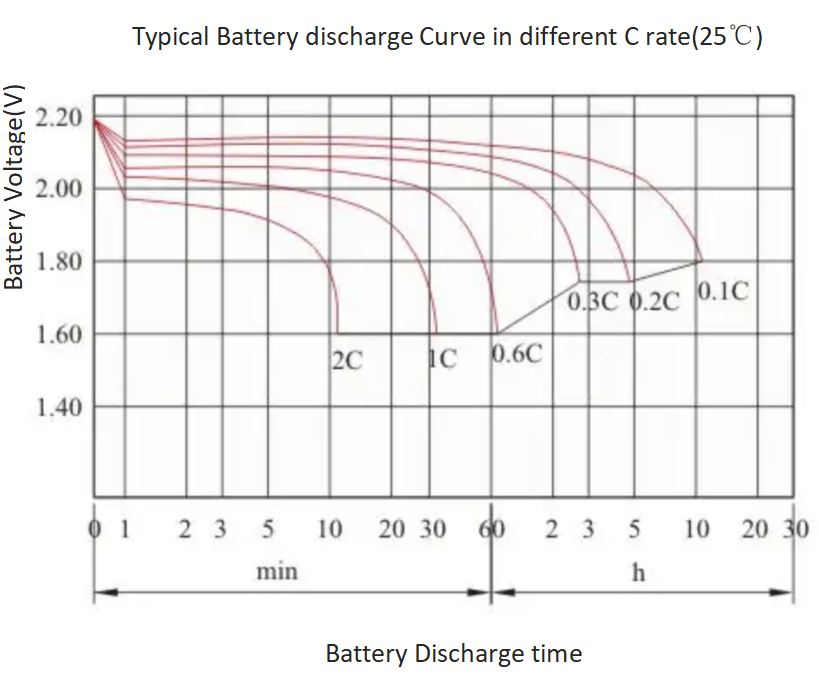
Voltage sag happens when battery voltage temporarily drops under load.
For example:
- a fully charged 6S LiPo may measure 25.2V at rest
- but during a hard throttle punch, voltage may instantly fall to 20V or lower
Once the load decreases, voltage partially recovers.
This behavior is completely normal to some extent.
The problem is that excessive voltage sag:
- reduces performance
- causes early low-voltage warnings
- increases ESC stress
- creates additional heat
- reduces system efficiency
In FPV drones, voltage sag is often most visible during rapid acceleration or sharp propeller loading changes.
2. Internal Resistance Is Still the Main Limitation
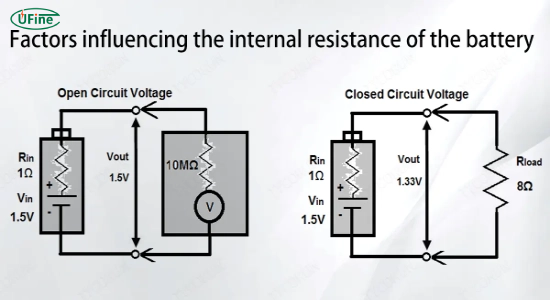
The biggest reason high C-rating batteries still sag is internal resistance.
Every battery cell has resistance inside:
- electrode resistance
- electrolyte resistance
- separator resistance
- current collector resistance
- weld and connector resistance
Whenever current flows, voltage drops across this resistance.
The relationship follows:
As current demand increases, voltage drop increases proportionally.
Even extremely good LiPo cells still have measurable resistance.
At very high current draw, even small resistance values become significant.
For example:
- 2 milliohms may sound tiny
- but at 150A discharge, the voltage drop becomes substantial
This is unavoidable.
3. High C-Rating Does Not Mean Zero Resistance
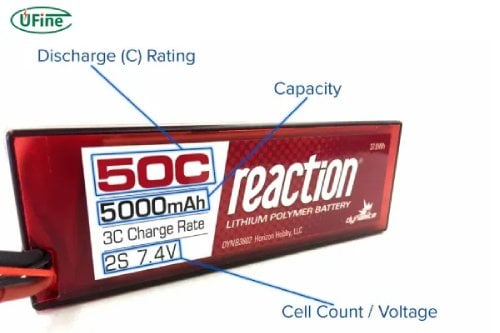
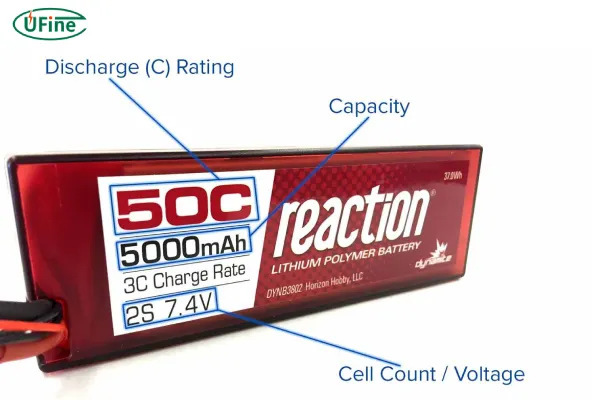
Many people misunderstand what C-rating actually represents.
A battery advertised as:
does not mean the battery can deliver that current without voltage drop.
In many cases, C-ratings are also heavily marketing-driven.
Some manufacturers rate cells based on:
- short burst conditions
- ideal temperatures
- unrealistic laboratory testing
- voltage thresholds that would be unacceptable in real applications
A battery may technically survive a very high discharge current while still experiencing large voltage sag.
These are not the same thing.
4. Current Spikes Are Much Higher Than Average Current
Another major reason for sag is transient current demand.
Many systems do not draw smooth continuous current.
Instead, they create rapid spikes.
For example:
- FPV drones during throttle punches
- robotics during motor startup
- RC cars during sudden acceleration
A drone averaging 40A may briefly spike above 150A during aggressive maneuvers.
These short bursts happen faster than the electrochemical system can respond efficiently.
As a result:
- ion transport lags behind
- voltage temporarily collapses
- internal heat rises rapidly
The battery may recover seconds later, but the sag still occurred.
5. Temperature Has a Massive Impact
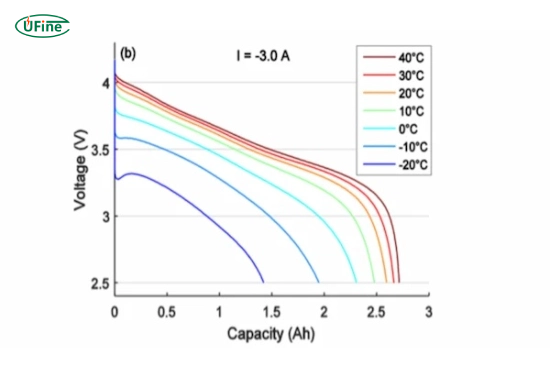
Battery temperature strongly affects voltage sag behavior.
Cold batteries almost always sag more.
At lower temperatures:
- electrolyte conductivity decreases
- lithium ion mobility slows
- internal resistance increases
This is why a LiPo pack that feels powerful indoors may suddenly perform poorly outside during winter flights.
Even high-end racing packs experience significant sag when cold.
Many FPV pilots notice:
- the first flight sags heavily
- later flights improve after the pack warms up
This is because internal resistance decreases as temperature rises to a more optimal operating range.
6. Cell Aging Makes Sag Worse Over Time
As LiPo batteries age:
- internal resistance increases
- electrode materials degrade
- electrolyte decomposition progresses
- SEI layers thicken
All of these effects increase voltage sag.
This is why an older battery:
- feels weaker
- loses punch
- drops voltage faster
- heats up more quickly
even if capacity loss appears relatively small.
In many high-power applications, rising internal resistance becomes a bigger issue than actual capacity reduction.
A pack may still retain 80% capacity while already feeling unusable for aggressive discharge applications.
7. Wire, Connector, and Solder Resistance Also Matter
Not all voltage sag comes from inside the cells themselves.
External resistance contributes too.
Common hidden sources include:
- undersized wires
- poor solder joints
- aging connectors
- oxidized contacts
- cheap XT60 clones
- damaged balance leads
At high current, even small connection resistance creates noticeable voltage loss and heat.
In extreme cases, connector resistance alone can create several watts of wasted power.
This is one reason premium racing setups often use:
- larger wire gauges
- short power paths
- high-quality connectors
- minimal resistance layouts
8. Why Higher Capacity Packs Usually Sag Less
Larger capacity packs generally experience lower voltage sag.
This is because:
- larger electrodes reduce current density
- internal resistance is usually lower
- the load is distributed across more active material
For example:
- a 2200mAh pack delivering 100A is under far more stress than
- a 5000mAh pack delivering the same current
Even if both packs carry similar C-ratings.
This is one reason larger batteries often feel “stronger” under load despite similar voltage ratings.
9.Electrochemistry Cannot React Instantly
One overlooked factor is that batteries are chemical systems, not ideal power supplies.
Lithium ions physically move through:
- electrolyte
- separators
- electrode structures
This process takes time.
When current demand changes extremely fast, ion transport cannot instantly match the load.
The result is temporary polarization inside the cell:
- ion concentration gradients develop
- local resistance increases
- terminal voltage drops
This behavior becomes especially visible during high burst discharge applications.
10. Why Voltage Recovers After Throttle Reduction
Many users notice that voltage rebounds quickly after reducing load.
This happens because:
- current decreases
- internal heating temporarily slows
- electrochemical equilibrium partially recovers
The battery was not necessarily “empty.”
It simply could not maintain voltage under that specific load condition.
This distinction matters because:
- high sag does not always mean low capacity
- but it often indicates rising internal stress
11. Engineering Trade-Offs Behind High C-Rating Cells
Designing batteries for extreme discharge performance requires trade-offs.
To reduce internal resistance, manufacturers may use:
- thinner separators
- more conductive additives
- different electrode formulations
- larger current collectors
However, optimizing for power density can reduce:
- energy density
- cycle life
- long-term stability
This is why ultra-high-performance LiPo packs often age faster than lower-stress industrial cells.
The chemistry is being pushed closer to its physical limits.
12. Practical Ways to Reduce Voltage Sag
For makers and builders working with high-current systems, several strategies help reduce sag:
Keep Batteries Warm
Cold packs always perform worse.
Avoid Over-Aging Packs
High internal resistance dramatically increases sag.
Use Proper Wire Gauge
Thin wires create unnecessary resistance.
Reduce Connector Losses
Cheap connectors often become hidden bottlenecks.
Avoid Excessive Continuous Current
Even high C-rating packs have realistic limits.
Use Larger Capacity Packs When Possible
Higher capacity usually lowers effective stress per cell.