RT1170 Motion HMI
Real-Time Motor Control and Predictive Maintenance Platform
A practical real-time control platform built around the PHYTEC phyBOARD®-RT1170
This project explores that concept using the phyBOARD®-RT1170 Development Kit from PHYTEC and the NXP i.MX RT1176 crossover MCU.
The initial prototype focuses on a simple but representative application: controlling a stepper motor while providing a local OLED-based human-machine interface. The architecture is intentionally kept simple at this stage so that the real-time control path can be tested independently before adding more advanced diagnostic functions.
The long-term goal is to evolve the prototype into a compact motion-control and predictive-maintenance platform capable of controlling a machine while continuously monitoring its operating condition.
Why the PHYTEC phyBOARD®-RT1170?
The development platform is one of the most interesting parts of this project.
The phyBOARD®-RT1170 Development Kit combines the PHYTEC phyCORE-RT1170 System on Module with a carrier board designed for development and evaluation. At its heart is the NXP i.MX RT1176, a dual-core crossover MCU based on Arm Cortex-M7 and Cortex-M4.
This architecture provides an unusual combination for embedded development: high processing capability while retaining the deterministic characteristics expected from a microcontroller-based real-time system.
The phyCORE-RT1170 module is extremely compact, measuring approximately 30 × 30 mm, while the development kit exposes a large number of interfaces for experimentation and system integration.
The platform provides access to interfaces such as:
- Dual Gigabit Ethernet
- CAN-FD
- USB 2.0
- MIPI-DSI display interface
- MIPI-CSI camera interface
- Multiple UART interfaces
- Multiple I²C and SPI interfaces
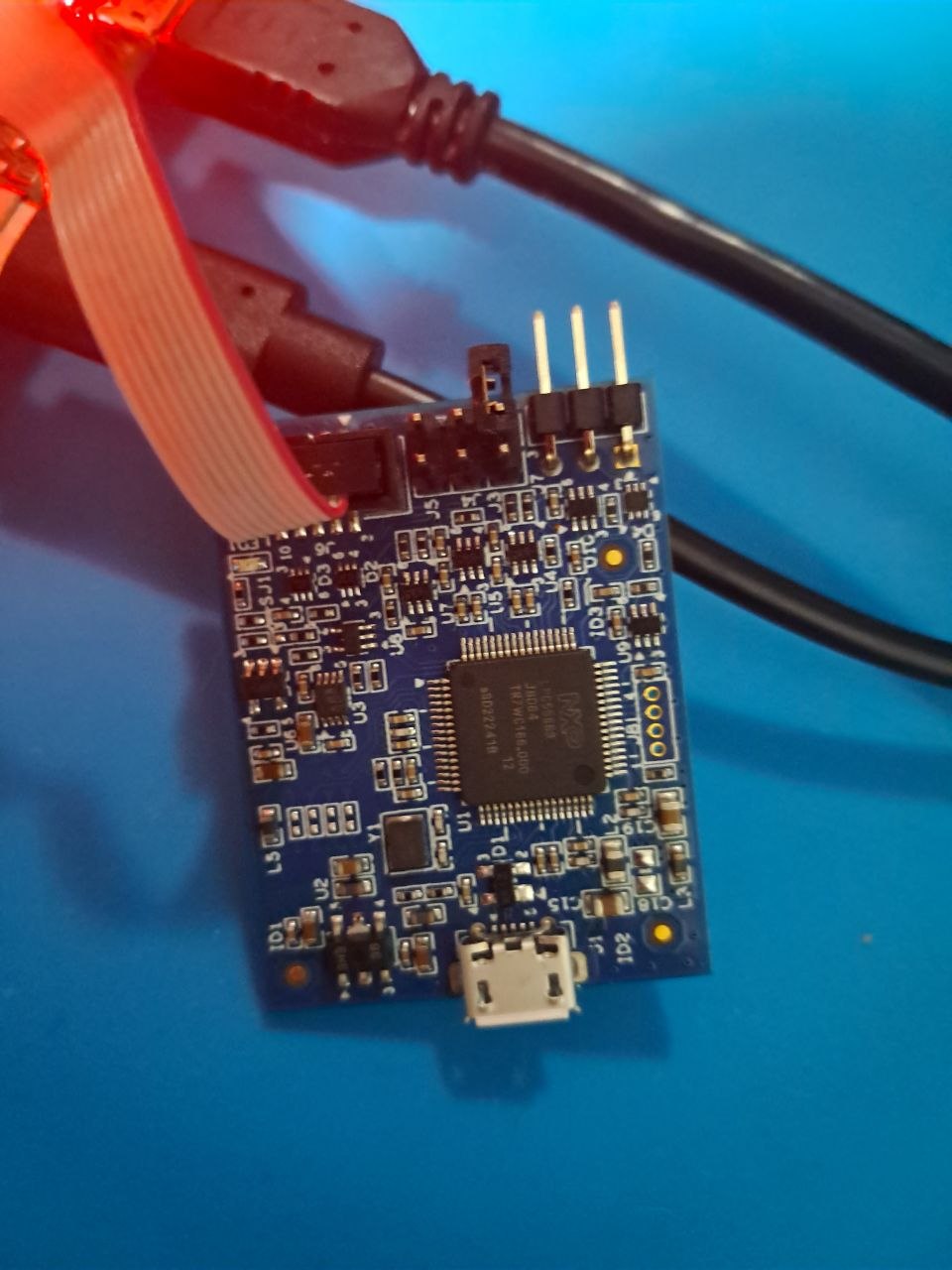
- JTAG/debug access
- Expansion interfaces
This makes the board particularly attractive for applications involving industrial automation, motor control, machine interfaces, connected equipment and real-time monitoring.
Another important advantage is the availability of a Zephyr-based software ecosystem. This allows the same hardware platform to be explored using a modern real-time operating system rather than treating the development kit as a simple bare-metal evaluation board.
For this project, that flexibility is important because the final system is expected to combine control, user interface, sensing and diagnostics.
Hardware Prototype
The current prototype uses:
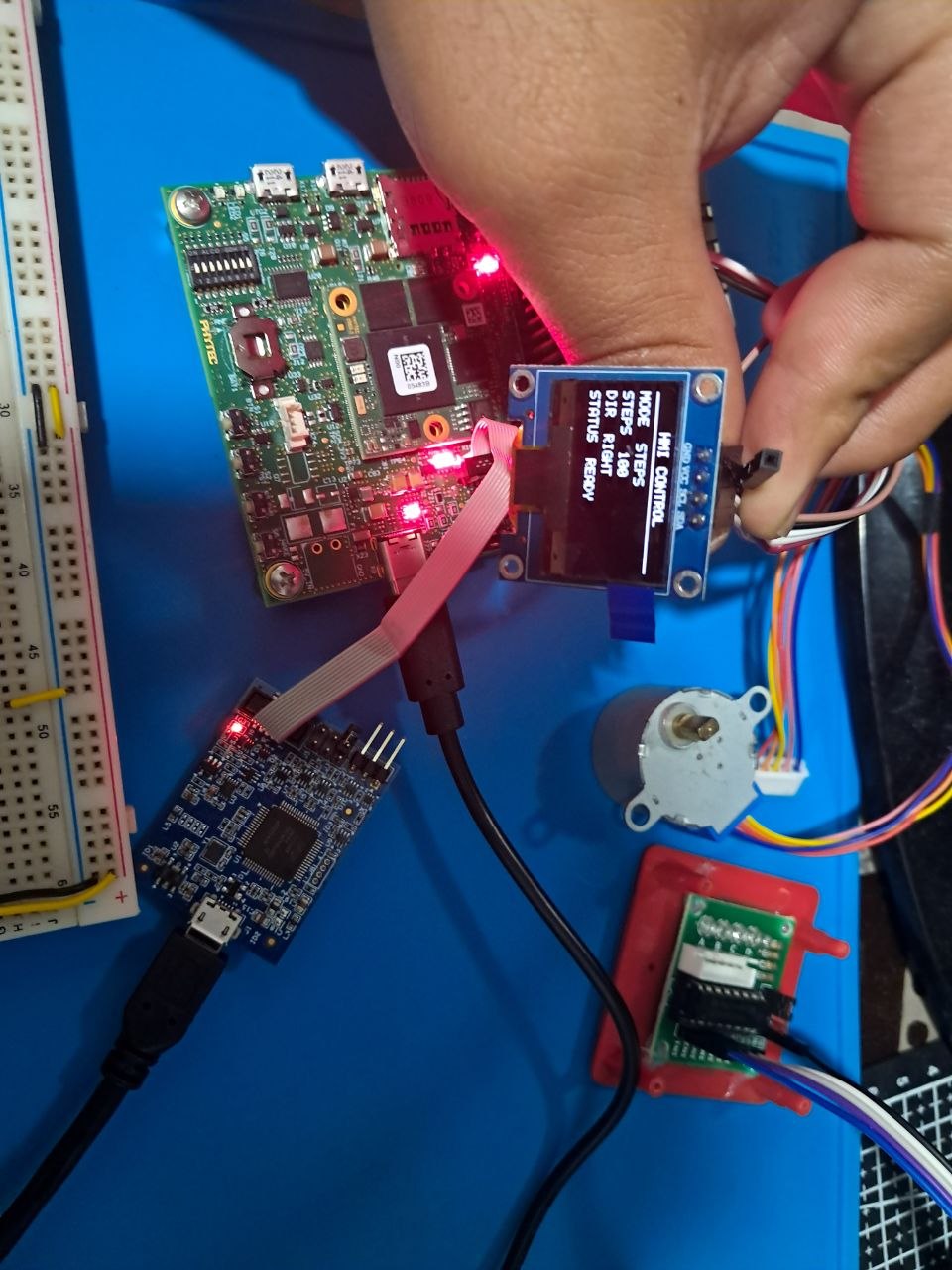
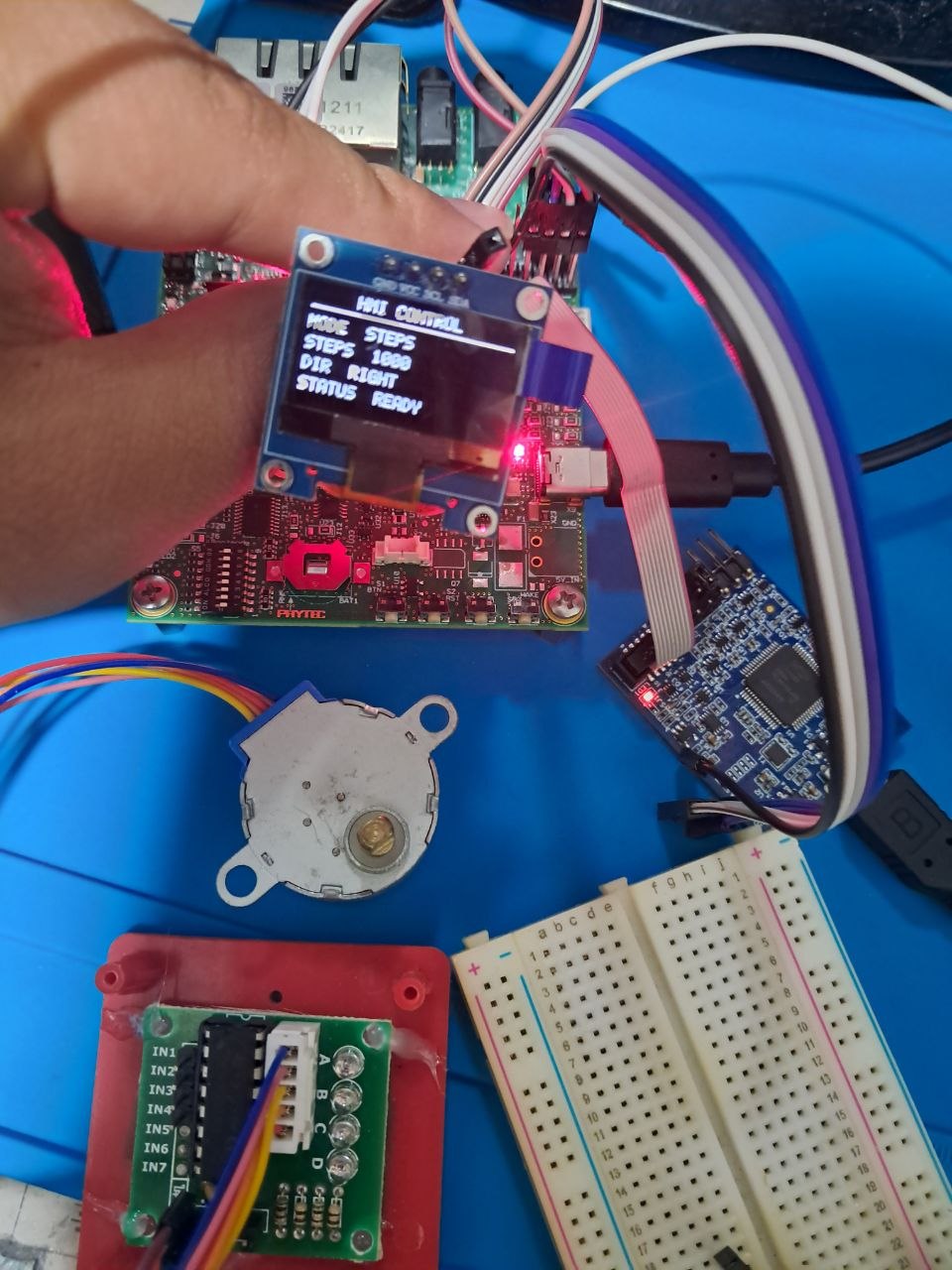
- PHYTEC phyBOARD®-RT1170 Development Kit
- NXP i.MX RT1176
- Zephyr RTOS
- 128 × 64 SSD1306 OLED
- 28BYJ-48 stepper motor
- ULN2003 driver board
- External motor supply
- User push button
The OLED communicates through I²C.
The motor is controlled through four GPIO outputs connected to the ULN2003 driver.
The motor is deliberately powered from an external supply rather than directly from the RT1170 board. The RT1170 GPIOs are used only as control signals for the driver.
Human-Machine Interface
The current interface is intentionally minimal.
The OLED presents information such as:
- HMI CONTROL
- MODE: STEPS
- STEPS: 200
- DIR: RIGHT
- STATUS: READY
The objective at this stage is not to create a sophisticated graphical interface.
Instead, the OLED provides immediate feedback about the machine state while keeping the firmware simple enough to verify the underlying real-time control.
A push button is currently used to modify the configured number of motor steps.
The prototype cycles through different step values, allowing the user to interact with the motion-control system without requiring an external computer.
Stepper Motor Control
The 28BYJ-48 stepper motor is controlled through a ULN2003 transistor array.
The firmware generates a half-step sequence for the four motor phases:
- Step 0 1000
- Step 1 1100
- Step 2 0100
- Step 3 0110
- Step 4 0010
- Step 5 0011
- Step 6 0001
- Step 7 1001
The sequence can be traversed forward or backward to control the direction of rotation.
This approach is intentionally straightforward. It provides a useful first implementation of deterministic GPIO-based motion control before moving toward more sophisticated motor-control hardware.
Software Architecture
The firmware is developed using Zephyr RTOS.
The application currently separates the main functions into logical components:
- Application
- │
- ├── OLED display
- │ ├── framebuffer
- │ ├── text rendering
- │ └── HMI update
- │
- ├── User input
- │ └── push button
- │
- └── Motion control
- ├── GPIO initialization
- ├── phase sequence
- ├── direction
- └── step generation
Device Tree is used to describe the hardware resources.
This is particularly useful for the project because hardware definitions such as GPIO assignments and I²C peripherals remain separated from the application logic.
The resulting architecture makes it easier to replace or expand hardware without rewriting the entire application.
Content goes Future Fault Analysis
The most important future development will be the integration of vibration and temperature analysis.
The RT1176's processing capability provides an interesting platform for experimenting with real-time signal processing directly at the edge.
Instead of continuously transmitting raw sensor data to an external computer, future versions of the system could perform part of the analysis locally and present only relevant information to the operator.
Conclusion
The RT1170 Motion HMI is intended as a practical exploration of how a high-performance crossover MCU can be used to combine real-time motion control, embedded HMI and machine-condition monitoring.
The PHYTEC phyBOARD®-RT1170 Development Kit is particularly well suited to this type of experimentation because it provides a compact RT1176-based platform together with a broad selection of industrial and multimedia interfaces.
The current prototype is only the beginning.
The next stages will focus on replacing the basic OLED interface with a touchscreen and adding temperature and vibration sensing. From there, the project can evolve from simple motor control into a system capable of identifying abnormal mechanical behavior and providing actionable information directly at the machine.
The ultimate goal is a compact embedded platform that does not simply control a machine, but also understands how that machine is operating